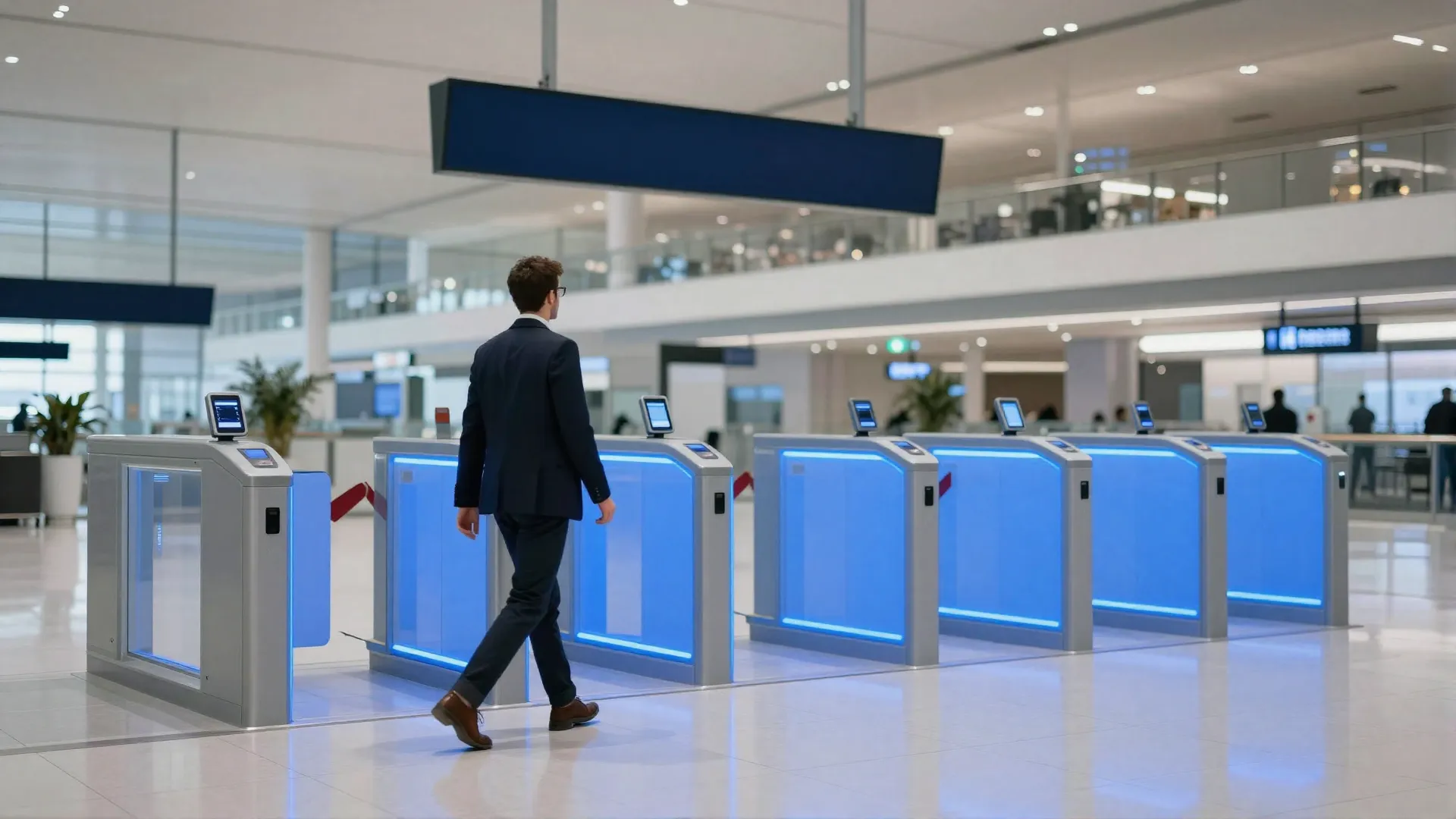
Imagine arriving at Johannesburg International Airport without waiting in a passport control queue, without presenting documents at any customs window—simply walking through a facial recognition gate that automatically completes identity verification, visa validation, and even health declarations, all within 30 seconds. This is not science fiction; it's the vision of the International Civil Aviation Organization's (ICAO) Digital Travel Credentials (DTC), and South Africa stands at the forefront of this travel revolution.
What Are Digital Travel Credentials (DTC)?
DTC is ICAO's next-generation travel document framework, designed to revolutionize international travel identity verification through digitalization and biometrics in the post-pandemic era. According to ICAO's official documentation released in 2025, DTC employs an innovative "dual-component system":
- 1 Virtual Component (DTC-VC): Stored on travelers' smartphones or secure cloud servers, containing encrypted biometric features and digital copies of travel documents. Travelers can view, update, and delete their data at any time.
- 2 Physical Component (DTC-PC): Physical passports are retained but their chips will be upgraded to enhanced chips supporting DTC standards, storing richer security verification data than current passports.
The core of this system is "end-to-end biometric verification." From the moment you check in at the airport, your facial features become your "digital passport." Andy Smith, Innovation Lead at SITA, a global airline technology company, told media: "DTC is not some futuristic concept—it's an actual response that airlines and airports are seriously evaluating and deploying."
South Africa's Strategic Position: Advantages of an African Aviation Hub
South Africa holds unique strategic advantages in this global travel revolution. Johannesburg's O.R. Tambo International Airport is Africa's busiest international airport, handling over 21 million international passengers annually. Cape Town International Airport is South Africa's second-largest aviation hub, with international flight numbers continuously growing in recent years.
A spokesperson for Airports Company South Africa (ACSA) stated: "We are working closely with ICAO and international aviation stakeholders to ensure South Africa's airport infrastructure can support DTC system implementation. This includes upgrading biometric equipment, improving cybersecurity architecture, and training airport personnel."
According to the International Air Transport Association (IATA), by 2040, African air passenger volume will grow more than 150% compared to 2019, with South Africa as the largest beneficiary of this growth. The massive and continuously growing passenger traffic gives South Africa ample reason and economic scale to率先 adopt the latest travel technology.
Biometric Technology: Evolution from "Inspection" to "Verification"
The core technology of the DTC system is biometrics, particularly facial recognition. The entire travel process will be redesigned:
- 1 Stage 1: Digital Registration. Before departure, travelers can choose to join the DTC system through an officially certified mobile application. The app will require you to take a high-resolution facial photo and cross-verify it with data stored in your passport chip.
- 2 Stage 2: Airport Check-in and Security. Upon arriving at the airport, you no longer need to present your passport and interact face-to-face with staff. You simply stand before a check-in gate equipped with a depth-sensing camera for about 3 seconds, and the system automatically compares your facial features with data stored in your DTC-VC.
- 3 Stage 3: Border Control. Upon arrival at your destination, the same facial recognition process automatically verifies your visa status, health declarations, and customs declarations. The entire border processing time, traditionally averaging 5-7 minutes, dramatically shortens to 30 seconds to 1 minute.
Far-Reaching Impact on South Africa's Economy
The introduction of the DTC system will have far-reaching effects on South Africa's economy, particularly in tourism and business investment:
- 1 Tourism Competitiveness Boost: According to South African Tourism statistics, South Africa welcomed 10.3 million international visitors in 2025, with tourism contributing 3.2% of GDP. The DTC system will significantly improve the inbound experience for foreign visitors, further enhancing South Africa's attractiveness as a tourism destination.
- 2 Business Investment Environment Optimization: For foreign investors, convenient travel arrangements are an important investment environment indicator. As a G20 member, South Africa has worked to enhance its international image in recent years. The DTC system introduction will demonstrate South Africa's technological innovation capability and modernized governance to global investors.
- 3 Aviation Industry Efficiency Gains: According to SITA estimates, after full DTC adoption, airlines can save approximately 15-20 minutes of ground operations time per flight—equivalent to billions of dollars in annual savings for global airlines.
South Africa's Preparation: Challenges and Opportunities
However, implementing DTC is not without challenges. First is the infrastructure upgrade cost—upgrading airport biometric equipment, building secure DTC verification networks, and training personnel all require substantial investment. The South African government needs to allocate dedicated funds from the national budget or seek financing support from international organizations.
Second is the privacy and data security issue. DTC systems store biometric data—once leaked, victims cannot "change" their facial features the way they can change a password. Accordingly, ICAO specifically emphasizes that DTC systems must adopt a "decentralized" design—each country operates independent verification nodes, with no centralized global database, significantly reducing systemic risk.
Significance for Investors
For overseas investors considering South African property investment, the DTC system introduction is a positive signal. It demonstrates the South African government's commitment to modernizing infrastructure, enhancing international competitiveness, and creating a more convenient business environment for foreign investors. This synergy with other reforms—energy stabilization, logistics improvement, and business regulation simplification—forms a coordinated effect.
"DTC is not just a technology upgrade—it's a window for South Africa to demonstrate its modernized governance capabilities to the world. For overseas investors, this means more convenient business travel, more efficient border experiences, and a more open investment environment."
Frequently Asked Questions
References & Data Sources
Leo Pan
Chief Economic Analyst, Dragon Crestline Advisory
Specializing in South African property investment, education planning, retirement solutions, and residency programs. With over 10 years of cross-border investment advisory experience, helping Taiwanese investors build ideal asset portfolios and life solutions in South Africa.