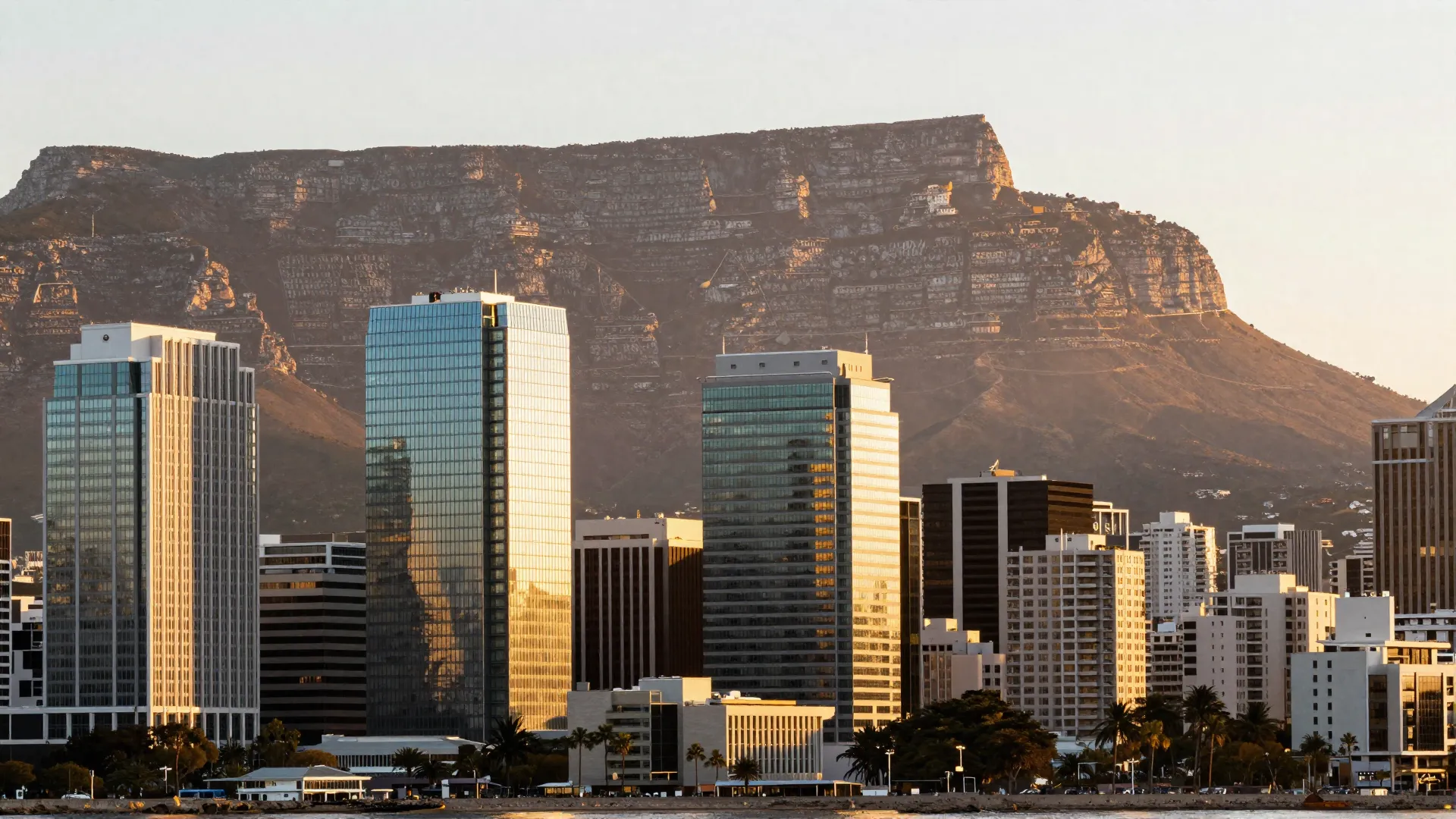
In April 2026, global financial markets witnessed a significant milestone: according to Bank of America's latest EEMEA (Europe, Middle East, Africa) Equity Strategist report, South Africa achieved a weighted average ranking score of 83, surpassing Saudi Arabia (81), Greece (79), Poland (77), Turkey (76), and the UAE (74) to become the world's #1 investment destination. This report has sparked intense discussion among global institutional investors—after the JSE experienced its worst single-month performance in nearly 20 years during March, why does South African equity receive such high evaluation? And what does this signal mean for Taiwanese investors focused on the South African market?
Bank of America's Ranking Methodology: What Made South Africa Top the List?
Bank of America's EEMEA equity strategy ranking is not a subjective score—it is a rigorous quantitative model. According to the methodology disclosed in the report, the ranking employs six weighted indicators:
| Indicator | Weight | South Africa's Performance |
|---|---|---|
| Valuation | 10% | Attractive P/E range |
| Historical Valuation | 10% | Post-correction valuation repair potential |
| Earnings Growth | 20% | Strong momentum in mining and financial sectors |
| Price/Momentum per Share | 20% | Supported by institutional buying |
| Dividends | 20% | Attractive average dividend yield |
| GEM Fund Allocation | 20% | Strategic allocation increase |
This weighting design clearly shows: Bank of America looks not just at short-term valuation but at long-term momentum and institutional fund flows. Earnings growth and GEM fund allocation at 20% each—40% combined—indicates this report functions more as a "future outlook" than a "current snapshot."
South Africa's ability to stand out in this rigorous evaluation framework reflects international institutions' recognition of South Africa's structural economic reforms. Over the past three years, the Ramaphosa administration's initiatives to stabilize electricity supply, ease logistics bottlenecks, and strengthen fiscal discipline have been progressively improving South Africa's long-term investment fundamentals.
Background of the March Storm: Why Is This Ranking More Important Now?
However, no analysis can ignore recent market context. In March 2026, the JSE experienced its worst single-month performance in nearly 20 years, losing close to R3 trillion (approximately NT$15 trillion) in market capitalization. The trigger for this storm was a series of international geopolitical events: US and Israeli attacks on Iran, oil infrastructure under siege, and rapidly escalating Gulf tensions. As a commodity-exporting nation, South Africa's equity market was inevitably affected.
The mining sector (particularly platinum group metals and gold producers) fell more than 15% in a single month, with the financial sector also suffering heavy losses. Investor confidence was severely impacted, with many retail investors beginning panic selling.
But precisely amid this turbulence, Bank of America's report carries particular significance. Institutional investors are using the opportunity created by excessive market pessimism to reallocate South African assets. What they see is: March's sharp correction was driven by external factors, not deterioration in South Africa's economic fundamentals; when geopolitical risks ease, the valuation gap will attract substantial capital return.
Simply put: March's storm created a "panic discount," and this report tells us that smart money is finding value in that discount.
Collective Strength of South African Companies: 12 of the Top 20
Another highlight of the Bank of America report: South African stocks occupy 12 of the top 20 positions in the evaluation. This number means South African corporate quality is broadly recognized internationally—not just a single company or sector carrying the weight.
Selected companies span multiple key sectors:
Mining Giants: Northam Platinum and Sibanye Stillwater represent South Africa's core position in the global platinum group metals (PGM) supply chain. Platinum group metals (platinum, palladium, rhodium) are key raw materials for electric vehicles and green technology. South Africa holds approximately 70% of global PGM reserves, giving it indispensable strategic value in the energy transition trend.
Financial Services: Standard Bank, Absa, and Old Mutual represent South Africa's position as an African financial center. These banks serve not only local markets but span the entire African continent, replicating successful models in other emerging markets.
Asset Management Rising Star: Ninety One's inclusion demonstrates South Africa's strength in financial professional services, with assets under management and investment returns both gaining international recognition.
This diversified corporate ecosystem means investing in South African equities is not "betting on a single theme"—it is participating in a mature market with endogenous growth momentum.
Economic Reform Dividends: Structural Improvements Support Long-Term Value
Bank of America's high rating for South Africa is underpinned by trust in South Africa's economic reform trajectory. In recent years, the South African government has achieved substantive progress in several key areas:
Energy Stability: The most severe load-shedding crisis in history is gradually easing. Eskom's power station maintenance program is beginning to show results, renewable energy projects are accelerating grid connection, and industrial/commercial power shortages have notably improved. Stable electricity supply is the infrastructure prerequisite for economic growth—this improvement directly benefits manufacturers and mining companies.
Logistics Bottleneck Relief: South Africa's state-owned logistics enterprise Transnet is undergoing modernization transformation, with rail and port efficiency gradually improving. Problems that restricted iron ore and coal exports in recent years are being resolved. For an economy anchored in resource exports, this holds immense significance.
Fiscal Discipline Strengthening: The South African National Treasury's budget management is becoming increasingly rigorous, with the debt-to-GDP ratio stabilizing. International rating agencies' outlook on South Africa's sovereign rating has shifted from negative to stable, reducing government default risk and giving foreign investors greater confidence to hold South African assets.
Institutional Anti-Corruption: Although progress is slow, the government has taken some action on fighting corruption and improving public governance. Improvement in the rule of law environment is an important factor in attracting foreign direct investment.
These structural improvements will not disappear amid March's market turbulence. They are South Africa's "internal strength," determining South Africa's position in long-term competition.
Sixth South Africa Investment Summit: R889.8 Billion in Votes of Confidence
Amid market turmoil, South Africa held the Sixth South Africa Investment Summit, committing to attract R889.8 billion (approximately NT$440 billion) in investment. This is a clear signal: regardless of short-term market fluctuations, international investors' long-term commitment to South Africa has not changed.
These R889.8 billion in investment commitments come from global multinational corporations and institutional investors, spanning:
- 1 Manufacturing (automotive assembly, electronics, medical equipment)
- 2 Energy (solar, wind, hydrogen)
- 3 Mining processing (PGM deep processing, rare metal smelting)
- 4 Agribusiness (food processing, storage logistics)
- 5 Digital infrastructure (data centers, fiber networks)
This diversified investment influx will create jobs, upgrade technology, and strengthen South Africa's export competitiveness over the next 5-10 years. For the equity market, these investment commitments translating into corporate revenue and profit growth are the fundamental drivers supporting stock prices.
Implications for Taiwanese Investors: How Should We View South Africa Right Now?
By now, you might ask: March's market crash, and this moment's #1 ranking—which one is the "real South Africa"? Answer: Both are real, but apply to different time horizons.
March's turbulence is real—it is the product of geopolitical risk and market sentiment, affecting stock prices and investment returns in the short term. But Bank of America's ranking is equally real—it is recognition of South Africa's structural economic improvements, a judgment on long-term value.
For long-term investors, this moment may be a better entry point. Reasons are straightforward:
- 1 More attractive valuations: After correction, major stocks are more reasonably priced
- 2 Institutional capital inflow: Bank of America's report will attract more institutional investor attention to South Africa
- 3 Reform dividend release: Economic improvement effects will gradually emerge over the next 1-3 years
- 4 Rand exchange rate advantage: The Rand is at a relatively low point, giving foreign investors currency advantage
Of course, investing in South African equities carries risks requiring attention:
- Geopolitical risk (escalating global conflict could again impact commodity prices)
- Electricity supply stability (improving but still a constraint)
- Exchange rate volatility (Rand fluctuations against USD and TWD may affect returns)
- Regulatory environment changes (mining and agriculture policy adjustments may affect specific sectors)
This is precisely why professional advisors' value becomes more prominent at this moment. DingYao Advisory's local team helps investors:
- Evaluate individual companies' financial health and growth potential
- Identify defensive stocks with crash-resistance attributes
- Construct investment portfolios aligned with personal risk tolerance
- Handle cross-border capital flows and foreign exchange risk management
"Opportunity in crisis, confidence in turbulence."
Conclusion: Opportunity in Crisis, Confidence in Turbulence
Bank of America's #1 ranking for South Africa was not complimentary words spoken when the market was booming—it was a professional judgment made after experiencing March's storm. The foundation for this judgment comes from trust in South Africa's structural economic reforms, recognition of South African corporate strength, and belief in long-term value.
For Taiwanese investors watching South Africa, this report provides an important reference framework: don't be misled by short-term volatility; use a long-term perspective to examine South African market opportunities. Post-correction valuations, continuously advancing reforms, and ever-increasing foreign investment—these factors are laying the foundation for the next wave of South African equity growth.
Of course, investing is never an easy decision. You need professional advice to navigate complex markets, local knowledge to identify genuine value, and experience to balance risk and return. DingYao Advisory, specializing in the South African market for years, looks forward to sharing opportunities brought by this continent full of potential.
This moment may be precisely the time to reassess your South African investment portfolio.
Frequently Asked Questions
References & Data Sources
Leo Pan - 潘品樺
Chief Executive Officer, DingYao Advisory
Specializing in South African property investment, education & study abroad, retirement planning, and residency solutions. Assisting clients in establishing ideal asset portfolios and lifestyle solutions in South Africa. With over 10 years of cross-border investment advisory experience, committed to technology-driven transparency, enabling Taiwanese investors to control their wealth and future in South Africa as if they were there in person.