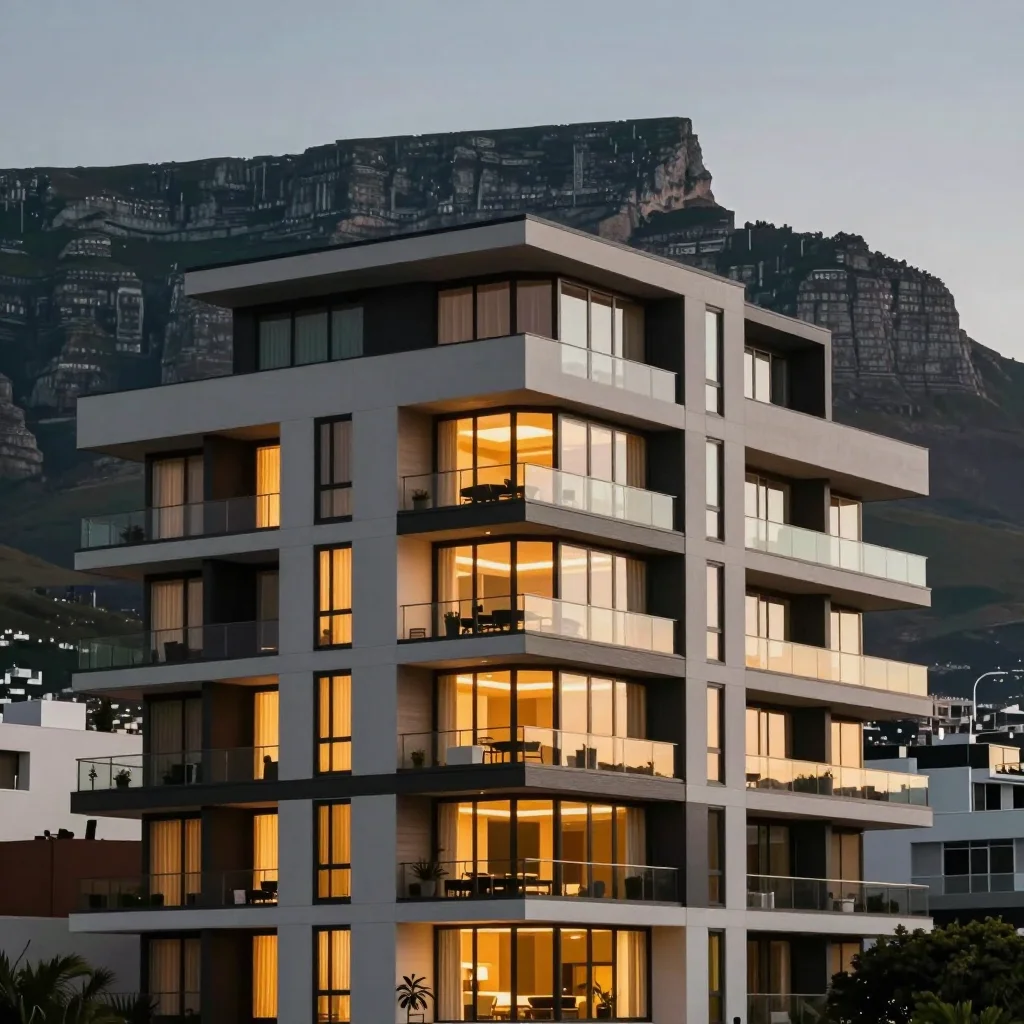
ZAR Exchange Rate Advantage & the Timing for Cape Town Property: A Currency Discount Window for Foreign Investors

ZAR Exchange Rate Advantage & the Timing for Cape Town Property: A Currency Discount Window for Foreign Investors

USD/ZAR is hovering around 16.23, down about 10% from the year-ago peak of 18.01. For overseas investors, entering the Cape Town property market now is like holding a natural "currency discount voucher." With the SARB holding rates steady and rental yields of 8-9% leading the world's major cities, three tailwinds are converging. The R 16,000,000 dual-engine structure puts your capital to work from day one.

Introduction: Why Now Is the Strategic Time to Enter

In June 2026, the South African Reserve Bank (SARB) held the repo rate steady at 7.00% for the third consecutive meeting, with the Prime rate remaining at 10.50%. For local buyers, persistently high rates mean heavy financing costs; but for overseas investors holding US dollars or other hard currencies, this is precisely the window where three tailwinds converge.

First, the rand sits at a relatively low level, with USD/ZAR around 16.23, down about 10% from the mid-2025 peak of 18.01 yet still well above the historical average of 14:1. This means that when foreign currency is converted into rand, buyers enjoy a currency discount of roughly 20-30%. Second, the high-rate environment has boosted bank deposit returns, with Standard Bank Wealth call accounts offering 6.5% with daily-accrued monthly-compounded interest, an effective annual rate of about 6.72%. Third, Cape Town rental yields remain at 8-9% (in areas such as Sea Point, City Bowl, and Woodstock), among the highest of major global cities.

Taken together, these three factors form a rare "currency discount window."
The Exchange-Rate Discount: Purchasing Power Amplified by the Numbers

Using an entry threshold of R 16,000,000, the US dollar cost for overseas investors differs significantly across exchange rates:

  • Mid-2025 peak (USD/ZAR 18.01): approx. USD 888,000
  • Current rate (USD/ZAR 16.23): approx. USD 986,000
  • Historical average (USD/ZAR 14.00): approx. USD 1,143,000

In other words, although the current rate has recovered from last year's low, it remains far below the historical average. More importantly, when the rand recovers from its low, overseas investors gain from both asset appreciation and the currency translation gain, producing a dual-appreciation effect.

Premium apartments on the Atlantic Seaboard and in the City Bowl range from R 3,000,000 to R 6,000,000 (about USD 185,000-370,000), offering outstanding value for overseas buyers. Compared with comparable properties in London, Sydney, or San Francisco, Cape Town's entry barrier is 3-5 times lower, yet its rental yields are 2-3 times higher.

SARB Holds Rates Steady: The Double-Edged Sword of a High-Rate Environment

At its June 2026 meeting, the SARB decided to hold the repo rate at 7.00%, a decision based on inflation still running above the target range (5.2% vs. the 4.5% target) and on the impact of global uncertainty on the South African economy.

For local buyers, a Prime rate of 10.50% translates into mortgage rates of about 11-12%, making financing costly and suppressing demand. But for overseas investors, high rates bring two direct benefits:

First, bank deposit returns are attractive. Standard Bank Wealth call accounts offer 6.5% with daily-accrued monthly-compounded interest, an effective annual rate of about 6.72%. A R 5,000,000 deposit earns roughly R 335,000+ per year, far above the 4-5% available on US dollar fixed deposits.

Second, competitive pressure eases. High rates curb demand from local buyers, creating more favourable negotiating room for overseas investors. The rising share of overseas buyers in Cape Town's high-end residential market through 2025-2026 is precisely the result of this rate arbitrage.

Cape Town Rental Yields: A Globally Leading Cash-Flow Engine

Cape Town's rental yields rank among the best of major global cities. According to data from The Africanvestor and Propflow:

  • Sea Point one-bedroom apartments: net yield 7.5-7.9%
  • City Bowl two-bedroom apartments: gross yield 8-9%
  • Woodstock, an emerging area: gross yield 8-9%

By comparison, London Zones 1-2 offer rental yields of just 2.5-3.5%, Sydney about 3-4%, and San Francisco 2.5-3%. Cape Town's yields are 2-3 times higher than these cities.

More importantly, rental demand in Cape Town remains strong. Vacancy rates in the Western Cape stay low, and housing demand driven by semigration (intra-province migration), the growth of the digital-nomad population, and a steady inflow of international students together support the sustainability of rental income.

The R 16,000,000 Dual-Engine Structure: Capital Working From Day One

For overseas investors, the R 16,000,000 allocation structure of DingYao's Phase 1 South Africa property programme is a cash-flow strategy built precisely for the exchange-rate window:

  • Property purchase price of R 10,450,000, targeting premium properties in Sea Point, the City Bowl, or the Atlantic Seaboard, generating 8-10% income when fully tenanted (income is earned only when rented; it is not a fixed guaranteed ratio).
  • Related costs of about R 550,000, covering transfer, legal, and trust setup fees.
  • R 5,000,000 in a Standard Bank Wealth call account, earning 6.5% with daily-accrued monthly-compounded interest, an effective annual rate of about 6.72%.

The dual-engine cash flow:

  • Rental engine: R 10,450,000 x 8-10% = R 836,000-1,045,000/year
  • Interest engine: R 5,000,000 x 6.5% with daily-accrued monthly-compounded interest, approx. R 335,000+/year
  • Total annual cash flow: R 1,171,000-1,380,000

And the hidden engine most easily overlooked: during the waiting period, the full R 16,000,000 begins earning interest immediately inside the attorney-trust protected account, at about R 86,000 per month (about R 2,849 per day). Your capital never idles from day one.

The Dual-Appreciation Effect When the Exchange Rate Recovers

The greatest advantage for overseas investors is this: when the rand recovers from its current low, you gain two returns at once.

Layer one: asset appreciation in local currency. Property values are denominated in rand, and as the Cape Town market keeps rising (the Uppers area appreciated 2-3 times between 2020 and 2026), the asset itself is growing in value.

Layer two: currency translation gain. Assuming USD/ZAR is 16.23 at the time of investment, if the rate recovers to the 14:1 historical average, the same rand-denominated asset will gain about 16% when converted back into dollars. If it recovers to 12:1 (the 2019-2020 level), the gain is even larger.

This is why a low exchange rate is the best time to enter, because you buy at a discounted price while enjoying rental cash flow, and then capture dual appreciation when the rate recovers.

Conclusion: The Currency Discount Window Will Not Stay Open Forever

With the SARB holding rates steady, the rand at a relatively low level, and rental yields leading the world, these three tailwinds are converging to form a strategic window for overseas investors entering the Cape Town market. The R 16,000,000 dual-engine structure puts your capital to work from day one (rental income of R 836,000-1,045,000 plus interest of R 335,000+), while attorney-trust protection keeps your funds secure. When the rand recovers, the dual-appreciation effect will deliver outsized returns for overseas investors.

Investing overseas, owning property abroad, the exchange-rate window is a gift of a discount, but the window will not stay open forever.

Start Your South Africa Property Plan

Get professional South Africa property investment advice and market analysis. Let DingYao Advisory help you make informed investment decisions.

Book a Consultation