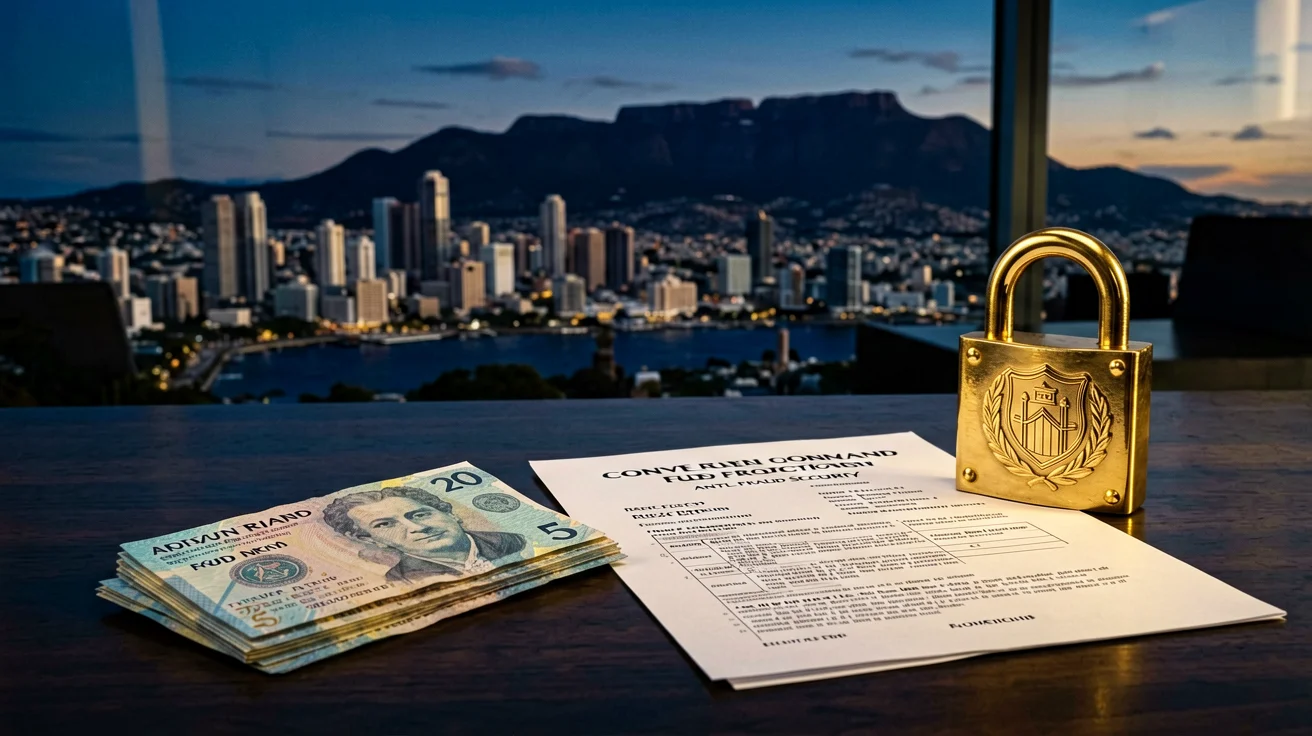
South Africa Property Fraud Conveyancer Trust Account Fund Security

Property Fraud Is Surging in South Africa in 2026: How the Conveyancer Trust Account Protects Your Purchase Funds

In 2026, property fraud cases are surging across South Africa, becoming the biggest psychological barrier for foreign buyers. Just 4 days ago (2026-08-06), the South African Police Service announced a R27 million property fraud sentencing; at the same time, conveyancer trust account theft (R720,000), FSCA impersonation scams, and Dirty Deed forged-title schemes are emerging one after another. For Taiwanese investors preparing to buy property in Cape Town, fund security is a more critical decision factor than property prices or interest rates.

This article, written from a Taiwanese buyer's perspective, breaks down the five major property fraud schemes in South Africa in 2026, explains in depth how the conveyancer trust account protects your purchase funds, and provides 5 anti-fraud rules so you can buy property in Cape Town with complete fund security.

Key Takeaways: South African law requires all property transaction funds to be deposited into a regulated conveyancer trust account, with funds released only after the title has been successfully transferred. With fraud surging in 2026, Taiwanese buyers must ensure funds flow into an LPC-regulated trust account and never transfer to a private account. DingYao Advisory ensures your purchase funds arrive safely in South Africa through regulated trust accounts + Standard Bank fund custody + Garlicke & Bousfield legal backing.


Property Fraud Is Surging in South Africa in 2026: Real Case Breakdown

Property fraud in South Africa is not new, but the scale and sophistication of cases in 2026 have clearly escalated. Below are the most representative real cases from recent months:

R27 Million Sentencing

The South African Police Service announced on 2026-08-06 that a company director and agent were sentenced for colluding to defraud R27 million in property transactions, exposing an insider-collusion fraud model.

R720,000 Trust Account Theft

A conveyancer trust account theft warning: criminals stole R720,000 from a trust account, highlighting the importance of choosing a regulated attorney.

FSCA Impersonation Scams

The Financial Sector Conduct Authority (FSCA) warns that impersonation scams posing as FSCA or licensed financial service providers (FSPs) are surging, luring investors to transfer funds.

Dirty Deed Scams

Criminals forge title documents (Title Deed) to sell properties that do not exist, with buyers only discovering after payment that the title was never in the seller's name.

The common thread in these cases is that victims paid when their funds were not in a regulated channel. Whether transferred to a private account, an unverified third-party account, or a fake "attorney" account, once funds leave the regulated system, they are extremely difficult to recover.

The Conveyancer Trust Account: The Cornerstone of Purchase Fund Security

South Africa's Legal Practice Act requires all property transaction funds to be deposited into a trust account independently managed by the conveyancer. This is the core mechanism of South African property transaction security and the most important fund protection for foreign buyers.

Here is how the trust account works:

01

Purchase funds deposited into a regulated trust account

The buyer's deposit and balance are deposited into the conveyancer's trust account, which is strictly regulated by the Legal Practice Council (LPC) and independently audited annually.

02

Funds independently managed, cannot be misappropriated

The trust account is completely separate from the law firm's operating account. Attorneys cannot use client funds. Funds are only released once all transaction conditions are met.

03

Funds released only after title transfer completes

Funds are only released to the seller after the title has been successfully registered in the buyer's name, all municipal fees are settled, and all transaction conditions are met.

04

Double protection: bank custody + legal backing

DingYao Advisory further provides dual fund security protection through Standard Bank fund custody and Garlicke & Bousfield legal backing.

"The conveyancer trust account is the cornerstone of South African property transaction security. It ensures that buyers and sellers can complete a fair and safe transaction even under information asymmetry." — Garlicke & Bousfield Property Law Department Partner

'Fraud Unravels All': Fraud Makes the Transaction Void

South African law has an important principle: "fraud unravels all". This means that even if the title has been successfully transferred and registered, if the transaction involves fraud, the court can declare the transaction void and revoke the title.

This is a double warning for buyers:

  • Paid but not yet transferred — if funds are defrauded, the buyer may lose everything, and recovery is a lengthy process
  • Transferred but fraudulent — even if you obtain the title, if the transaction is deemed fraudulent, the title can still be revoked

Therefore, fund flow security is the first line of defense in South African property investment, far more important than price or location. Choosing a regulated trust account is the fundamental way to avoid falling into the "fraud unravels all" trap.

Key Insight: For Taiwanese buyers investing in Cape Town, the biggest risk is not falling property prices but unregulated fund flow. As long as your purchase funds enter an LPC-regulated conveyancer trust account, even if fraud occurs, the funds remain protected by law and can be recovered through legal channels.

5 Anti-Fraud Rules: Practical Fund Security for Cape Town Property

Based on 2026 South African fraud cases and legal practice, here are the 5 anti-fraud rules that Taiwanese buyers must follow:

1

Verify the conveyancer's credentials

Verify the conveyancer's license and qualifications through the Legal Practice Council (LPC) official website, confirming they are a legally registered conveyancer, not an impersonator.

2

Confirm the trust account is LPC-regulated

Request proof that the trust account is regulated, confirming funds are deposited into an LPC-regulated, annually audited trust account, not a private account.

3

Never transfer to a private account

Any request to transfer purchase funds to a personal account or an unregulated third-party account is a fraud red flag. Purchase funds can only enter a regulated trust account.

4

Verify FICA identity checks

South Africa's Financial Intelligence Centre Act (FICA) requires identity verification for all financial transactions. Confirm the attorney actually performs FICA checks to prevent impersonation transactions.

5

Use a bank custody platform

Prioritize service providers offering bank custody (such as Buyers Trust) or regulated trust accounts, ensuring funds are safely held by a third party until the transaction completes.

These 5 rules may seem simple, but they are the steps most often overlooked by victims in 2026 South African fraud cases. DingYao Advisory's professional team helps Taiwanese buyers verify each one, ensuring every fund flow is safe and compliant.

Buying Property in Cape Town: A One-Stop Fund Security Solution

Cape Town, as the most popular city for international investors in South Africa, continues to attract global capital to its Atlantic Seaboard, CBD, and Southern Suburbs premium properties. However, fund security is the key to whether foreign buyers can enter the market with confidence.

DingYao Advisory provides a complete one-stop fund security service for Taiwanese investors:

  • Regulated trust account — purchase funds are deposited into an LPC-regulated conveyancer trust account, protected by law
  • Standard Bank fund custody — fund custody through one of South Africa's largest banks, providing double protection
  • Garlicke & Bousfield legal backing — a century-old law firm providing contract review, due diligence, and title transfer services
  • FICA compliance checks — assisting Taiwanese buyers with identity verification to ensure compliant transactions
  • Bilingual support — full Chinese-English service, so Taiwanese buyers do not need to fly to South Africa

Advice for investors: The entry threshold for buying property in Cape Town is R 16,000,000 (fixed value). Before starting any transaction, ensure your funds flow into a regulated trust account. Through DingYao Advisory's one-stop service, Taiwanese investors can complete every step of Cape Town property investment safely and conveniently, with complete fund security.

Conclusion: Fund Security, Confident Property Investment

The surge in South African property fraud in 2026 is a reality that Taiwanese buyers must confront. However, by mastering the protection mechanism of the conveyancer trust account and strictly following the 5 anti-fraud rules, fund security in Cape Town property investment is entirely within your control.

South African law provides strong fund protection for foreign buyers through regulated trust accounts. Choosing the right fund security partner is the first and most critical step in successful Cape Town property investment.

Want to ensure your purchase funds arrive safely in South Africa? Book a one-on-one consultation today to receive a dedicated fund security assessment from DingYao Advisory.

Ensure Your Purchase Funds Enter a Regulated Trust Account

Property fraud is surging in South Africa in 2026, and fund security is urgent. DingYao Advisory ensures your purchase funds arrive safely in South Africa through regulated conveyancer trust accounts + Standard Bank fund custody + Garlicke & Bousfield legal backing. Premium Cape Town properties are in limited supply — book a consultation today to secure your fund security plan.

Book Now