> >
SARB MPC rate decision and Cape Town property investment

South African Central Bank Rate Decision Preview: Entry Timing and Strategy for Property Investors | DingYao Advisory

On 28 May 2026, the Monetary Policy Committee (MPC) of the South African Reserve Bank (SARB) is set to hold its rate-decision meeting — one of the most important events this year shaping overseas investors' timing decisions. For Taiwanese high-net-worth individuals considering overseas property, the direction of rates directly affects rental yields, currency trends and funding costs — and the convergence of all three is precisely where the strategic value of Cape Town property lies.

This article starts from the SARB rate decision and analyses how Cape Town property sustains stable cash-flow returns under different rate scenarios, explaining why the R 16,000,000 dual-engine investment structure holds its ground amid policy volatility.


The SARB MPC Meeting: Why Overseas Investors Must Pay Attention

The Core Impact of the Rate Decision

South Africa's benchmark rate currently sits at a relatively high level, and SARB faces the dilemma of "inflationary pressure that persists but is easing":

  • Signs of easing inflation: South Africa's Consumer Price Index (CPI) has gradually fallen from its 2023 peak, with food and energy price pressures easing
  • Global rate trend: major economies have entered an easing cycle; if South Africa does not follow, currency appreciation would instead compress export competitiveness
  • Geopolitical variables: Middle East tensions affect oil-price expectations, which in turn influence inflation forecasts and the rate path

For overseas investors, the impact of the rate decision runs in both directions:

Rate scenario Impact on property investment Impact on foreign-currency investors
Rates unchanged Rent-to-price ratio keeps its current advantage; market expectations stay stable ZAR stable in the short term; the entry window remains open
Rate cut of 25 basis points Borrowing costs fall and expectations of higher house prices strengthen ZAR may weaken in the short term, widening the currency advantage for foreign buyers
Rate cut of 50 basis points Mortgage rates fall sharply and buyers flood in ZAR depreciation pressure rises, but the asset's appreciation potential increases in tandem

History Tells Us: The Easing Cycle Is a Golden Window for Property Entry

Looking back at SARB's past easing cycles, South African house prices rose an average of 8-15% in the 12 to 24 months after rate cuts began. Because of the structural housing demand from technology-sector migration (semigration), Cape Town often outperforms the national average.

Key data

  • Western Cape estates rose 58% over five years (Seeff report)
  • Prime Cape Town properties have a vacancy period of only 2-4 weeks, with structural supply-demand imbalance persisting
  • Landlord confidence hit 88% in Q1 2026, an 11-year high (Absa data)

Cape Town Property: A Stable Anchor Amid Rate Volatility

Tech-Industry Boom Provides an Independent Fundamental

Cape Town's housing demand does not rely on rate policy alone. In recent years, a wave of "semigration" (domestic migration) has been flowing into the Western Cape:

  • Tech companies such as Amazon, Microsoft and Takealot are expanding operations in Cape Town, creating substantial high-income rental demand
  • Western Cape housing supply cannot keep pace with the rate of net population inflow
  • A vacancy period of just 2-4 weeks — this means that even if rate policy turns, the rental market for prime properties remains strong

The Rental Engine: A Rate-Insensitive Source of Cash Flow

Cape Town rental yields range from 8-10% (fully-let income). The logic underlying this figure is supply-demand imbalance rather than the level of rates:

  • When rates fall, more local buyers qualify for mortgages, pushing up house prices → rents follow
  • When rates stay high, more people are forced to rent → rental demand rises → vacancy is even lower
  • In either scenario, fully-let income from the R 10,450,000 property reaches R 836,000 to R 1,045,000 per year

This is why Cape Town property is called a "rate haven" — rental cash flow does not depend entirely on the direction of rates.

Cape Town property investment dual-engine cash flow
The dual-engine cash-flow structure of Cape Town property under different rate scenarios

The Dual-Engine Structure: Cash-Flow Protection Across Rate Scenarios

R 16,000,000 Portfolio Structure

The core of the DingYao Phase 1 South Africa plan is a "dual-engine" cash-flow structure that offers both offensive and defensive flexibility in a changing-rate environment:

Engine Investment capital Annual return Rate correlation
Rental engine R 10,450,000 (property purchase price) R 836,000 - R 1,045,000 (fully-let income, 8-10%) Low — driven by supply and demand, not by rates
Interest engine R 5,000,000 (Standard Bank Wealth call account) R 335,000+ per year (6.5% compounded daily, paid monthly; effective annual rate ≈ 6.72%) High — a rise in rates widens the interest spread
Total R 16,000,000 R 1,171,000 - R 1,380,000 per year The two engines buffer each other

Dual-Engine Performance Under Rate Changes

Rate scenario Rental engine Interest engine Dual-engine total Assessment
Rates held R 836K-1.045M R 335K+ R 1.17M-1.38M Robust baseline
Rate cut of 25bp Unchanged or slightly higher Slightly lower (call-account rate follows rates down) R 1.15M-1.36M Limited decline, offset by house-price appreciation
Rate hike of 25bp Unchanged or slightly higher (rental demand rises) Slightly higher (call-account rate follows rates up) R 1.19M-1.42M Higher rates actually improve cash flow

Key Insight

The R 5,000,000 Standard Bank Wealth call account provides compounding that is settled daily and paid monthly; when rates rise, interest income increases in tandem, while the rental engine becomes even more robust in a rising-rate environment as more people turn to renting. The two engines buffer each other, keeping overall cash flow predictable across different rate scenarios.

Lawyer Trust Protection: A Financial Safety Net in Rate Storms

Why Not Hold It in a Personal Name?

  • Lawyer trust protection structure: funds are protected through a lawyer trust account, with investor rights safeguarded under the South African legal system
  • Liquidity: the R 5,000,000 is placed in a Standard Bank Wealth call account earning 6.5% compounded daily and paid monthly, allowing the allocation to be adjusted at any time in response to the rate environment
  • Legal protection: the trust structure isolates assets from personal-debt risk while preserving the investor's full control over the assets

Strategy Before and After the Rate Decision

  1. Before the decision: the full R 16,000,000 begins earning interest in the trust account immediately (about R 86,000 a month), so clients' money is never idle from day one
  2. After the decision: adjust the allocation between the R 5,000,000 call account and the R 10,450,000 property according to the direction of rates
  3. Long-term holding: the dual-engine structure delivers its most stable cash-flow advantages over a 3-5 year cycle

Lawyer Trust Protection

Investment funds operate entirely within a lawyer trust account and are protected under South African law from day one. Funds are never transferred directly to a personal account, ensuring transaction security for overseas investors. The full R 16,000,000 begins earning interest in the trust account immediately — about R 86,000 a month (about R 2,849 a day) — so clients' money is never idle from day one.

The Currency Window: An Additional Advantage for Foreign-Currency Investors

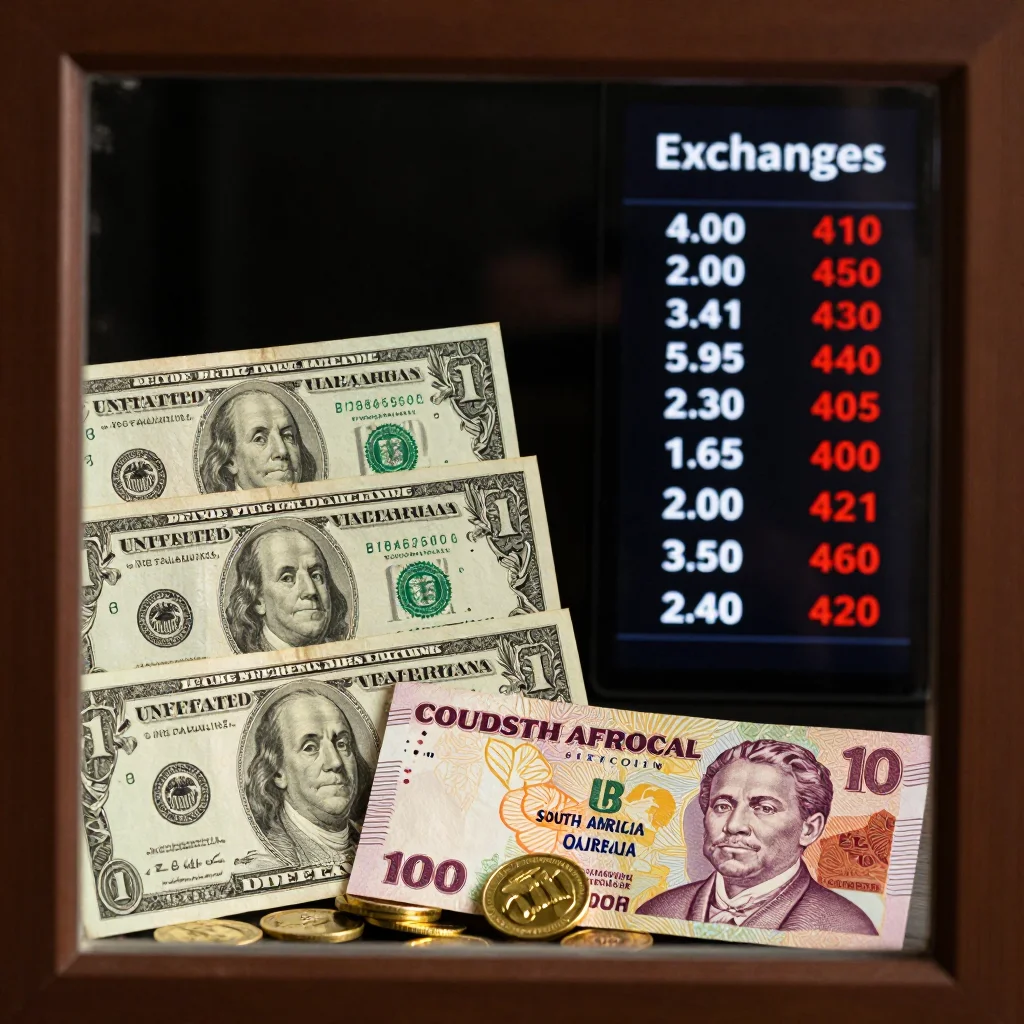
The Historical Significance of USD/ZAR at 18:1

The US dollar currently trades at about 18:1 against the rand, versus a historical average of 14:1, meaning foreign-currency investors enjoy a currency discount of roughly 20-30%:

  • At the current rate, R 16,000,000 requires only about USD 888,000
  • If the exchange rate reverts to its historical average of 14:1, the same asset's dollar value will appreciate naturally
  • A SARB rate cut may weaken the ZAR in the short term, creating an even better currency window for entry

The Dual Opportunity of Currency and Rates

Investor scenario Rates down Rates up
Currency unchanged House prices rise + interest slightly lower Rental demand up + interest higher
ZAR appreciates Dual gain (asset + currency) Interest income increases
ZAR depreciates Currency discount widens, lowering entry cost More rental income converted, and higher interest

In every scenario, the dual-engine structure's cash-flow return stays within the range of R 1,171,000 to R 1,380,000 per year.

South Africa vs. Other Emerging Markets: A Rate-Policy Comparison

Country/city Benchmark rate Gross property yield Currency discount (vs. USD) Rule-of-law protection Investment threshold
South Africa, Cape Town ~7.5% 8-10% ~30% English common law + lawyer trust R 16,000,000
Thailand, Bangkok ~2.5% 4-6% No significant discount Foreign ownership restricted Depends on the property
Vietnam, Ho Chi Minh City ~4.5% 5-7% Currency-control risk Foreign ownership for 50 years Depends on the property
Portugal, Lisbon ~2.5% 3-5% No discount within the eurozone EU regulations Depends on the property

Cape Town holds a competitive advantage across all three dimensions simultaneously: yield, currency discount and rule-of-law protection.

Scott Huang

Scott Huang

Business Development — Specializing in Cape Town premium property investment and cross-border wealth management for Asia-Pacific high-net-worth individuals.

Start Your Cape Town Property Journey

Schedule a one-on-one consultation with our team to explore premium investment opportunities in Cape Town's most resilient markets.

Consultation