> >
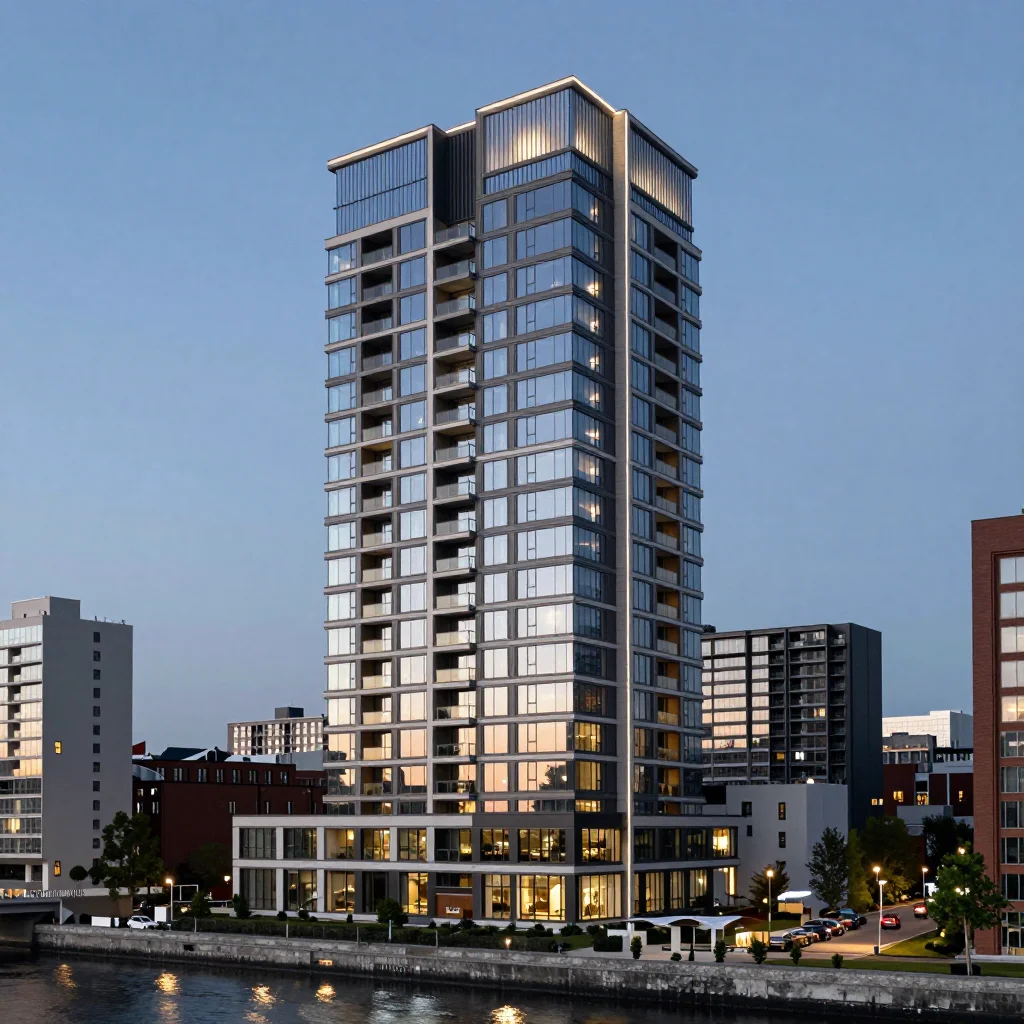
International buyers entering the Cape Town premium property market

International Buyers Flock to Cape Town: Why Premium Property Is Attracting Global High-Net-Worth Individuals | DingYao Advisory

Introduction

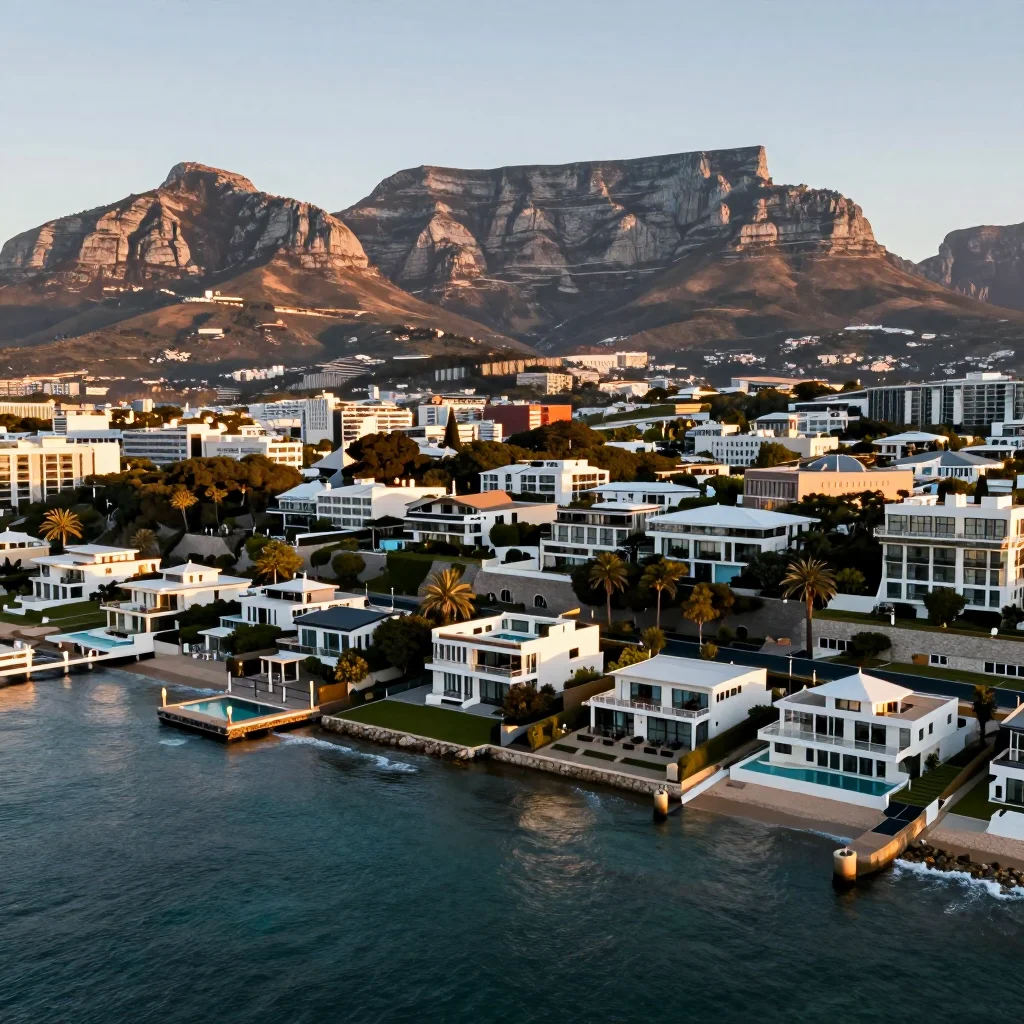
Cape Town's premium property market is undergoing a quiet revolution in 2026 — high-net-worth individuals from the United Kingdom, Germany, the Netherlands, the United States, and Asia are arriving in this most international of African cities at an unprecedented pace. The latest Daily Investor data shows that foreign buyers' share of South Africa's R 10,000,000+ property market keeps rising, and Cape Town's Atlantic Seaboard and V&A Waterfront are the preferred landing spots for this wave of international capital. For Taiwanese high-net-worth individuals considering overseas investment or overseas property, this is not a trend to be ignored — because the collective choices of international buyers often signal a market's true value.

Why Do International Buyers Choose Cape Town?

Cape Town has become the consensus choice of international buyers not because of any single factor, but through the compounding of six structural advantages:

  • English-speaking environment and rule-of-law heritage: South Africa's legal system is rooted in English common law, and its contractual and property-rights protections are highly compatible with European and American systems, allowing international buyers' legal advisers to engage seamlessly. This is an institutional advantage no other African city can match.
  • Exchange-rate discount window: ZAR/USD currently holds near 18:1; compared with the historical average of 14:1, buyers holding US dollars or euros enjoy an exchange-rate discount of roughly 20-30%. A R 16,000,000 luxury property on the Cape Town Waterfront converts to only about US$890,000 — in London or Sydney, the entry threshold for an equivalent property is 3 to 5 times that figure.
  • Double-digit yields: Rental yields in Cape Town's premium areas hold steady at 8-10%, far above London's 2-3%, Sydney's 3-4%, or Singapore's 2.5-3.5%. These are the hard numbers international buyers care about most.
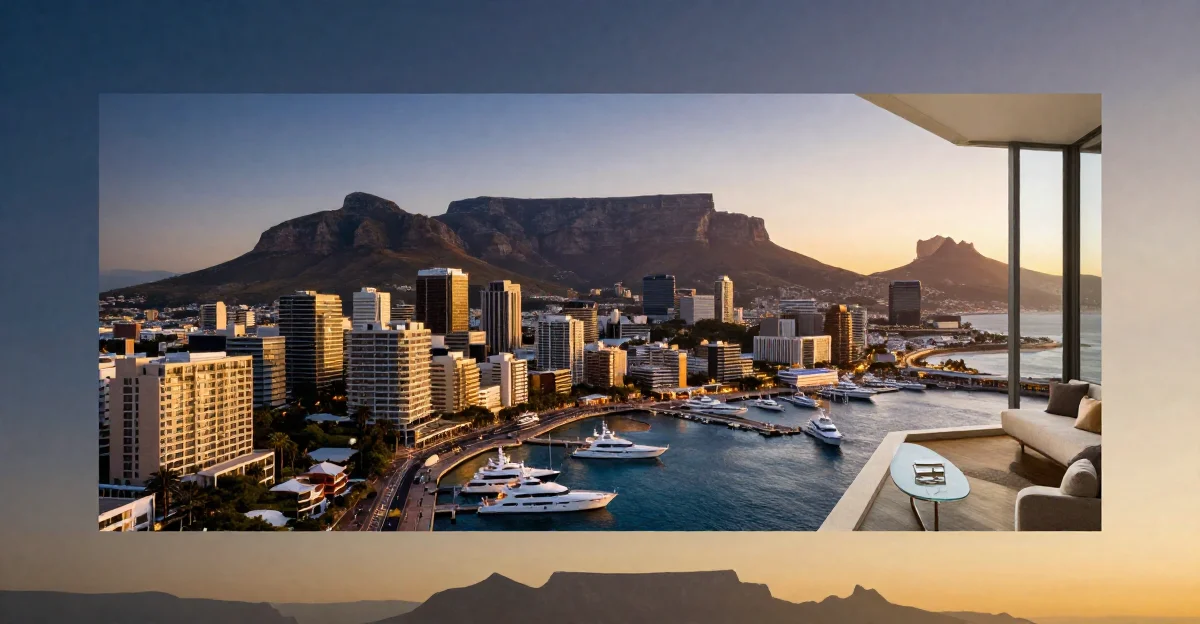
  • Lifestyle premium: Mediterranean climate, world-class wineries, Table Mountain National Park, globally renowned healthcare, and international schools — Cape Town delivers the dual return of "quality of life plus investment returns," not simply a numbers game.
  • Tech-driven rental demand: Technology giants such as Amazon AWS, Microsoft, and Google have established regional headquarters in Cape Town, creating a large number of well-paid expatriate roles. This pool of international tenants supports the extremely low 2-4 week vacancy periods on the Atlantic Seaboard and Waterfront.
  • Climate-resilience track record: After the 2018 "Day Zero" water crisis, Cape Town completed a V-shaped recovery of its water supply in under three years, demonstrating its governance capacity — international buyers regard this as a foundation of confidence for long-term holding.

International vs. Local Buyers: Behavioural Differences Shape Market Structure

Understanding the behavioural differences between international and local buyers is key to judging the trajectory of Cape Town's premium market:

Characteristic International Buyers Local Buyers
Price range R 10,000,000+ R 2,000,000-5,000,000
Transaction method Mainly cash Mainly financed
Holding period Long-term, 5-15 years Shorter, 3-5 years
Location preference Atlantic Seaboard / Waterfront Scattered across districts
Management needs Remote management (rent-to-manage) Mostly self-managed
Decision logic Lifestyle + asset allocation + exchange-rate arbitrage Price-sensitive + owner-occupier needs

International buyers' preference for cash transactions and long-term holding strategies has built a solid "demand floor" for Cape Town's premium market. Even when the local market faces interest-rate volatility, the sustained inflow of international capital makes Atlantic Seaboard and Waterfront prices significantly more resilient than those of other areas.

R 16,000,000: The Standard Allocation Threshold for International Buyers

According to Daily Investor's trend coverage, foreign buyers' active range in South Africa is concentrated above R 10,000,000. DingYao's Phase 1 plan is the standard allocation structure designed precisely for this group of international buyers:

  • Total investment: R 16,000,000
  • Property purchase price: R 10,450,000 (a prime property on the Atlantic Seaboard / Waterfront)
  • Associated costs: approximately R 550,000 (transfer, legal, trust establishment, etc.)
  • Post-transfer deposit: R 5,000,000 (Standard Bank Wealth call account)

The Dual-Engine Cash-Flow Structure

The core competitiveness of this allocation lies not in a single asset but in its "dual-engine" cash-flow design:

Rental engine: R 10,450,000 x 8-10% = R 836,000 - R 1,045,000/year (fully-let income; earned only when the property is let)

Interest engine: R 5,000,000 x 6.5% compound interest settled daily, paid monthly = approximately R 335,000+/year (effective annual rate of about 6.72%, including compounding)

Total annual cash flow: R 1,171,000 - R 1,380,000

Achieving this level of cash flow would require 4-5 times the invested capital in London and 3 times in Sydney — the mathematical logic behind international buyers' choice of Cape Town is written in that gap.

The Hidden Engine: Interest Accrues from the Waiting Period

A key detail many international buyers overlook: the full R 16,000,000 begins earning interest the very first day it enters the trust account, at approximately R 86,000 per month (about R 2,849 per day). In other words, from the moment funds arrive to the completion of handover, the client's money is never idle — an advantage that other markets' transfer processes cannot offer.
Lawyer Trust Protection: The Compliance Moat for International Buyers

For overseas investors, the greatest uncertainty in cross-border property investment comes from compliance risk. The lawyer trust protection structure used by DingYao provides international buyers with three layers of protection:

  • Fund safety: The buyer's funds are deposited in full into the lawyer's trust account rather than directly into the seller's personal account, so capital is fully protected before handover
  • Automated compliance: Advance planning and withholding for non-resident sellers' capital gains tax (CGT) avoids compliance traps at exit
  • Process transparency: From site selection, inspection, and transfer to handover, every step is completed under lawyer supervision, so international buyers do not need to be physically present

This structure is the technical foundation that enables international buyers to complete a Cape Town property allocation "remotely."

Cape Town vs. Global Premium Markets: What Can R 16,000,000 Buy?

City Equivalent-property threshold Rental yield Exchange-rate discount International-buyer friendliness
Cape Town R 16,000,000 8-10% 20-30% ★★★★★
London R 48,000,000-64,000,000 2-3% None ★★★★
Sydney R 40,000,000-56,000,000 3-4% None ★★★★
Singapore R 48,000,000+ 2.5-3.5% None ★★★
Dubai R 24,000,000-32,000,000 5-7% None ★★★★

The data is clear: Cape Town offers the triple combination of "highest yields + largest exchange-rate discount + lowest threshold." This is precisely the underlying logic behind the sustained influx of international buyers.

The International Tenant Market: Who Supports the 8-10% Return?

The tenant structure of Cape Town's premium rental market differs fundamentally from the general residential market:

  • Expatriate tech executives: Employees of regional headquarters for firms such as Amazon, Microsoft, and Google, earning R 1,500,000+ annually with ample rental budgets
  • International finance secondees: Cape Town's status as an African financial hub attracts international talent from banks and asset-management firms
  • High-income digital nomads: A remote-work segment that has kept growing since the pandemic, favouring the lifestyle quality of the Waterfront and Sea Point
  • Seasonal premium tenants: Wealthy retirees escaping the European winter, renting for about 3-6 months a year

This tenant structure guarantees rental stability in premium areas — even amid overall economic volatility, the inelastic demand of international tenants keeps vacancy periods at extremely low levels.

Conclusion: International Buyers' Choice Is the Market's Answer

When high-net-worth individuals around the world vote for Cape Town with real money, that in itself is the most credible market signal. The exchange-rate discount provides the entry advantage, the dual-engine cash flow provides holding returns, and lawyer trust protection provides compliance security — the R 16,000,000 Phase 1 allocation builds for international buyers a complete path from overseas investment to stable passive income.

The question is not "why choose Cape Town" — but "why not act now."

Start Your Cape Town Property Journey

Schedule a one-on-one consultation with our team to explore premium investment opportunities in Cape Town's most resilient markets.

Consultation