2026 Global Real Estate Recovery: Why Cape Town Is the New Darling of International Capital

2026 Global Real Estate Recovery: Why Cape Town Is the New Darling of International Capital | DingYao Advisory

The Global Property Turning Point You Have Been Waiting For

Morgan Stanley has called 2026 "a turning point for real estate". After three years of high interest rates and depressed transaction volumes, global capital is returning to the property market at an astonishing pace. Yet most investors overlook a key point: where capital flows matters far more than when it flows.

While institutional investors flock to "stable markets" like London and New York, savvy individual investors have discovered a far more compelling opportunity. South Africa's Garden Route — and Cape Town in particular — has become the surprise favourite of international buyers, with entry prices just 60-70% of comparable coastal cities yet yields two to three times those of these "safe markets".

This is not speculation. The data is in: international buyers have already injected billions of rands into the South African property market this year, with Cape Town taking the largest share. The question is not whether to take part in this recovery — it is whether you have chosen the right location.

1. The 2026 Global Real Estate Recovery: Decoding Capital Flows

1.1 From Interest-Rate Anxiety to the Pursuit of Yield

Morgan Stanley's assessment is more than an analyst's optimistic forecast. The data supports it: global real estate investment fell 42% between 2022 and 2024, yet 2026 transaction volumes are tracking a 35% year-on-year recovery. Why? Rate cuts across major economies have opened an opportunity window not seen since 2019.

But the key difference is this: not all markets are recovering equally.

Markets such as London (up 2.1% year-on-year), Sydney (up 1.8%) and New York (up 3.4%) show only modest recoveries. These are saturated markets, where easy gains have long vanished. Meanwhile, emerging frontier property markets are growing by double digits — driven by the "artificial discount" created by currency depreciation that foreign buyers enjoy.

1.2 The Garden Route Phenomenon

South Africa's Garden Route — a 300-kilometre stretch of pristine coastline from Mossel Bay to the Storms River — has become 2026's most surprising real estate success story in the world.

According to TTYBrand Africa and regional property reports:

  • 1Registrations by foreign buyers in the Garden Route area up 47% year-on-year
  • 2Coastal property sales in the region up 31% versus 2025
  • 3The luxury segment (above R5 million) now accounts for 40% of foreign buyer purchases, up from 28% in 2024

There are three driving forces: 1. Lifestyle migration: wealthy European and North American buyers seeking tax-efficient relocation options 2. Normalised remote work: the "Zoom metropolis" model — high earners buying properties in beautiful destinations, freed from local employment constraints 3. Currency mathematics: the rand's depreciation makes South African property extremely attractive when priced in US dollars, euros and pounds

1.3 The Influx of International Buyers: Billions in Motion

Fast Company South Africa reports that international buyers have injected billions of rands into the South African property market. This is not fringe speculation — it is mainstream capital allocation by serious investors.

Key data:

  • 1US buyers: property purchase approvals up 62%
  • 2German buyers: now the largest European buyer group, drawn by South Africa's English-language infrastructure and British common-law system
  • 3British buyers: returning to the market after the Brexit pause, capitalising on the pound's strength against the rand

What is the common thread? These buyers are not trading the rand for quick profit. They are buying income-producing properties for long-term ownership — particularly short-let assets in Cape Town's booming tourism market.

2. Cape Town: Why It Is Becoming the World's Most Valuable Premier City

2.1 Cape Town vs Global Peers: The Data Does Not Lie

If you buy an equivalent two-bedroom sea-view apartment, here is what the market actually looks like:

| City | Two-Bed Sea-View Apartment | Gross Rental Yield | Five-Year Price Trend |

| Cape Town | R3.5-8.5M (approx. US$195K-475K) | 6-8% | +34% (2020-2025) | | Sydney | A$2.5-5M (approx. US$1.6-3.3M) | 2.5-3.5% | +18% (2020-2025) | | London Zone 1 | £1.5-3M (approx. US$1.9-3.8M) | 2.8-3.8% | +12% (2020-2025) | | Vancouver | C$1.8-4M (approx. US$1.3-2.9M) | 3-4% | +22% (2020-2025) |

Cape Town's advantage is clear: you can buy premium coastal property at up to 70% lower prices while earning twice the rental yield of the mature markets above.

2.2 Worsening Supply-Demand Imbalance

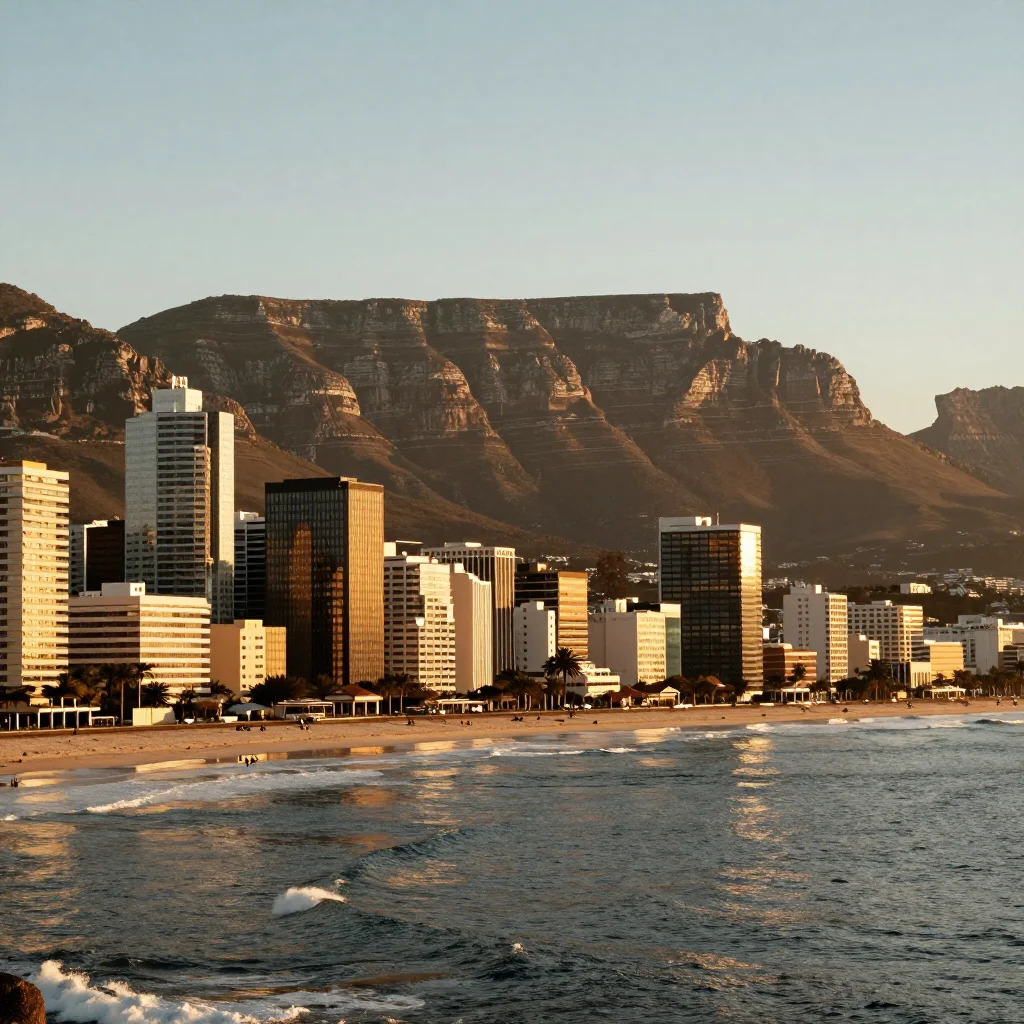
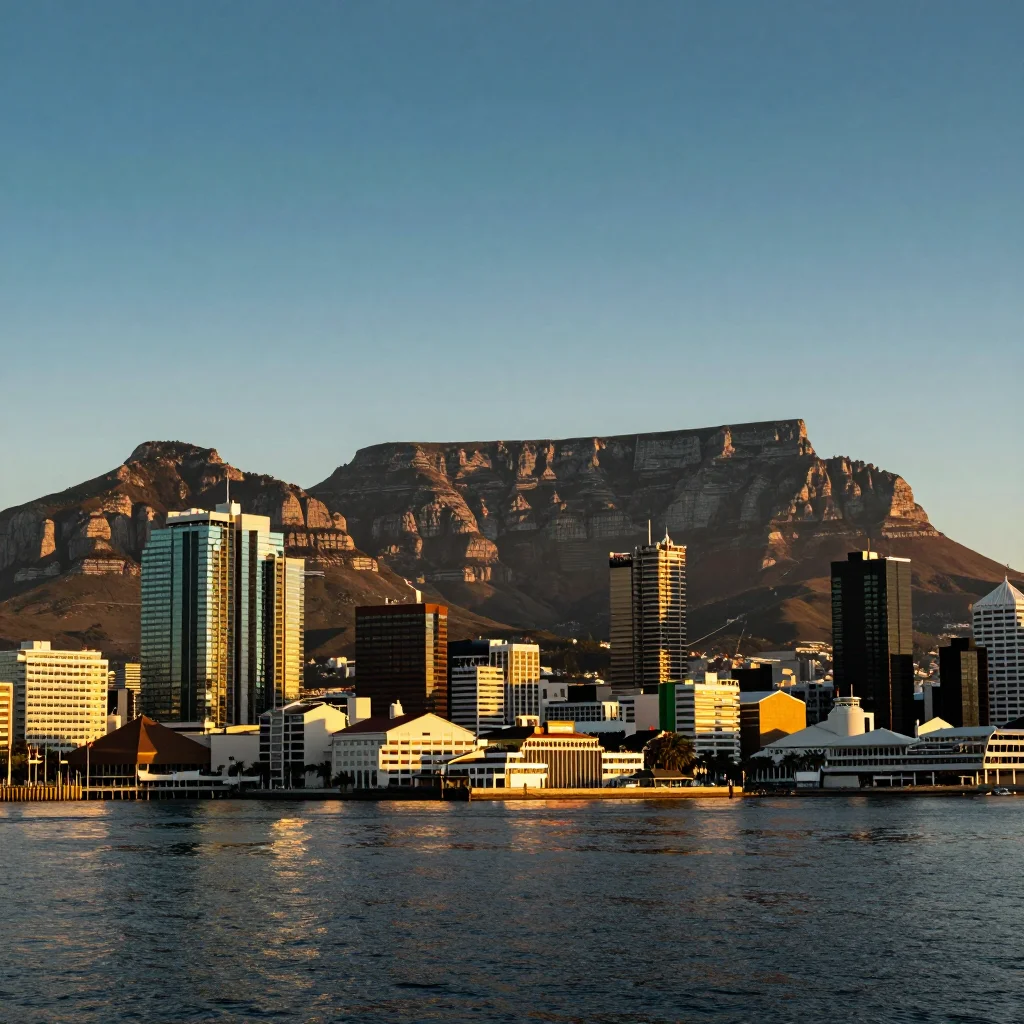
Cape Town is not just cheap — it also faces a supply shortage. Business Day reports that luxury apartment sales are surging as demand exceeds supply in the prime Atlantic Seaboard locations.

Specifically:

  • 1Inventory in the V&A Waterfront and Camps Bay is at a five-year low
  • 2Permit approval for new developments in prime locations takes 18-24 months
  • 3New builds come standard with Airbnb-ready fit-outs, targeting the tourism market

This supply-constrained environment gives existing landlords pricing power. When demand exceeds available units — as is currently the case in Cape Town's short-let market — rents outpace inflation, protecting real yields even during currency volatility.

2.3 The Currency Arbitrage Opportunity

Here is the mathematics every international investor should understand:

In 2015, one US dollar bought about 12 rands. In 2025, one US dollar buys about 18 rands.

That is a 50% currency depreciation over a decade. But the key point is: local property prices have not kept pace with the currency's decline. In dollar terms, many Cape Town properties are cheaper today than in 2015 — even as the local economy has grown, infrastructure has improved and tourism has expanded.

This creates an asymmetric opportunity: even if the rand merely stabilises (let alone appreciates), dollar-denominated returns already carry a 50% currency discount as built-in upside. If the rand recovers toward historical levels as South Africa's economic reforms advance, the currency factor alone could deliver an additional 30-50% return.

You are sailing with the wind, not against it.

3. Taiwan's Property Market vs Cape Town: Two Parallel Stories

3.1 Taiwan's Sluggish Property Market: The Data

For Taiwanese investors weighing overseas allocation, the domestic comparison makes the opportunity even clearer.

According to the Taipei Times and Taiwan News:

  • 1Property transaction volumes have fallen to an eight-year low
  • 2Taichung house prices down 8% year-on-year
  • 3New Taipei residential transaction volumes down 23% from the 2022 peak

The reasons are structural: credit tightening, property cooling measures, and demographic headwinds from Taiwan's ageing population. The government has effectively engineered a soft landing — but it is still a landing, not a take-off.

3.2 Divergent Trajectories

While Taiwan's market searches for a floor, Cape Town is writing a different story:

| Metric | Taiwan | Cape Town |

| 2025 Transaction Trend | Down 18% YoY | Up 31% YoY | | Foreign Buyer Activity | Restricted by regulation | Encouraged, simplified process | | Rental Yield Premium | 2-3.5% | 6-10% | | Currency Trend | Stable (TWD/USD) | Depreciating (rand discount) | | Policy Direction | Cooling measures | Pro-infrastructure, pro-growth |

The opportunity cost of staying anchored to Taiwan's market is real — prices keep falling and volumes are collapsing. Smart money is moving.

4. Investment Strategy: How to Participate in the Cape Town Opportunity

4.1 Geographic Focus Areas

Not all Cape Town properties are equal. For international investors, three areas offer the most attractive risk-adjusted returns:

Atlantic Seaboard (Camps Bay, Clifton, Bantry Bay)

  • 1Price range: R8-25 million
  • 2Target yield: 3-6% gross (prime locations, lower yield, higher appreciation)
  • 3Profile: luxury tourism, premium short lets

City Bowl (Gardens, Oranjezicht, Tamboerskloof)

  • 1Price range: R3.5-12 million
  • 2Target yield: 7-10% gross after short-let optimisation
  • 3Profile: Airbnb-friendly, central location, stable demand

Southern Suburbs (Constantia, Tokai, Bishopscourt)

  • 1Price range: R5-15 million
  • 2Target yield: 5-8% gross
  • 3Profile: long-term expat lets, family homes, proximity to school districts

4.2 Professional Management: Indispensable

The difference between a 6% gross yield and a 9% effective yield often comes down to professional property management — not just finding tenants, but proactively optimising income through dynamic pricing, occupancy management and maintenance oversight.

For overseas buyers, this is not an option — it is a necessity. South Africa's regulatory environment, tenant-rights framework and municipal compliance requirements all reward local expertise and penalise amateur management.

This is where DingYao Advisory excels.

Conclusion: The 2026 Cape Town Investment Thesis

1. Global real estate is recovering, but returns will be uneven — emerging markets are outperforming mature ones

2. Currency depreciation makes Cape Town property artificially cheap for USD/EUR/GBP buyers — real value lies behind the rand discount

3. Supply constraints in prime Cape Town locations create pricing power and rising rents

4. International capital is already moving — you are not the first mover, but it is not yet too late

5. Taiwan's market faces structural headwinds, while Cape Town offers the opposite thesis: growth, income, and currency optionality

The window is open. The question is whether you are willing to step through it.

Start Your Cape Town Property Journey

Schedule a one-on-one consultation with our team to explore premium investment opportunities in Cape Town's most resilient markets.

Consultation