> >
Cape Town winter rental strategy and year-round returns

Cape Town Winter Rental Market: How Investors Lock In 8-10% Full-Occupancy Returns Year-Round in the Off-Season | DingYao Advisory

Introduction: As Winter Arrives in June, Investment Resilience Is Put to the Test

Each year from June to August, Cape Town enters the southern-hemisphere winter. International flights dwindle, Airbnb occupancy slides, and short-term rental hosts begin to worry — this is when seasonal volatility is most pronounced. Yet for overseas investors who choose the right rental structure, winter is precisely the best window to test a portfolio’s counter-cyclical resilience.

As South Africa’s most international city, Cape Town has a distinctly dual-track rental market: short-term tourism lets swing sharply with the seasons, while professional guaranteed-rental management sustains stable cash flow year-round. Understanding this difference is the critical starting point for any overseas investment decision.

The Seasonal Truth of the Cape Town Rental Market

The Seasonal Trap of Short-Term (Airbnb) Lets

Cape Town’s short-term rental market depends heavily on international tourist flows. According to Cape Town Air Access data, international flight capacity falls by about 20-30% in winter, directly affecting short-stay demand:

  • Peak season (November-March): Airbnb occupancy can reach 85-95%, with a marked daily-rate premium
  • Off-season (June-August): Occupancy can fall to 40-50%, forcing some hosts to cut prices by 30-40%
  • Management costs: Short-term lets require ongoing cleaning, guest management, and platform fees (15-20%)
  • Regulatory risk: In 2024 the City of Cape Town tightened Airbnb regulations, requiring applications for a municipal short-term rental licence

This means investors who rely on the short-term model face at least three months of cash-flow pressure every year.

Professional Guaranteed-Rental Management: Stable 8-10% Full-Occupancy Returns Year-Round

Unlike short-term lets, professional guaranteed-rental management uses 12-month leases, with a management company handling tenant screening, maintenance, and rent collection:

  • Occupancy: The long-term rental market maintains stable occupancy above 90% year-round
  • Yield: Guaranteed-rental returns on curated Cape Town homes run at 8-10% (full-occupancy income)
  • Seasonal volatility: Long-term rents are almost unaffected by the seasons, with leases locking in year-round income
  • Management convenience: Overseas investors never have to handle rental matters personally

Using a property purchase price of R 10,450,000 as an example, the guaranteed-rental model yields annual rental income of R 836,000 to R 1,045,000 — a full-occupancy income expectation of “income only when tenanted,” not a fixed guarantee.

The R 16,000,000 Entry Threshold: How the Dual Engine Smooths Winter Volatility

The DingYao Phase 1 South Africa property programme offers a unique dual-engine return structure — precisely the core that reveals its value in the off-season:

Rental Engine

  • Property purchase price: R 10,450,000
  • Guaranteed-rental return: 8-10% full-occupancy income
  • Annual rental income: R 836,000 - R 1,045,000

Even in winter, long-term leases keep the rental engine running, unaffected by the tourist season.

Interest Engine: Earning from the Waiting Period

  • Post-settlement deposit: R 5,000,000 in a Standard Bank Wealth savings account
  • Interest rate: 6.5% daily-compounded, paid monthly (effective annual rate of approx. 6.72%)
  • Annual interest income: approx. R 335,000+

More critical is the hidden engine: the full R 16,000,000 begins accruing interest while held in the legal trust protection account, earning roughly R 86,000/month (about R 2,849/day). An investor’s capital is never idle from day one.

Combined Annual Cash Flow: R 1,171,000 - R 1,380,000

With the rental and interest engines combined, total annual cash flow ranges from R 1,171,000 to R 1,380,000. The significance of this figure: even if the winter rental market shows short-term swings, the interest engine still provides a stable cash-flow floor.

Investment Strategy for the Winter Rental Market

Strategy 1: Choose Guaranteed-Rental Management Over Short-Term Lets

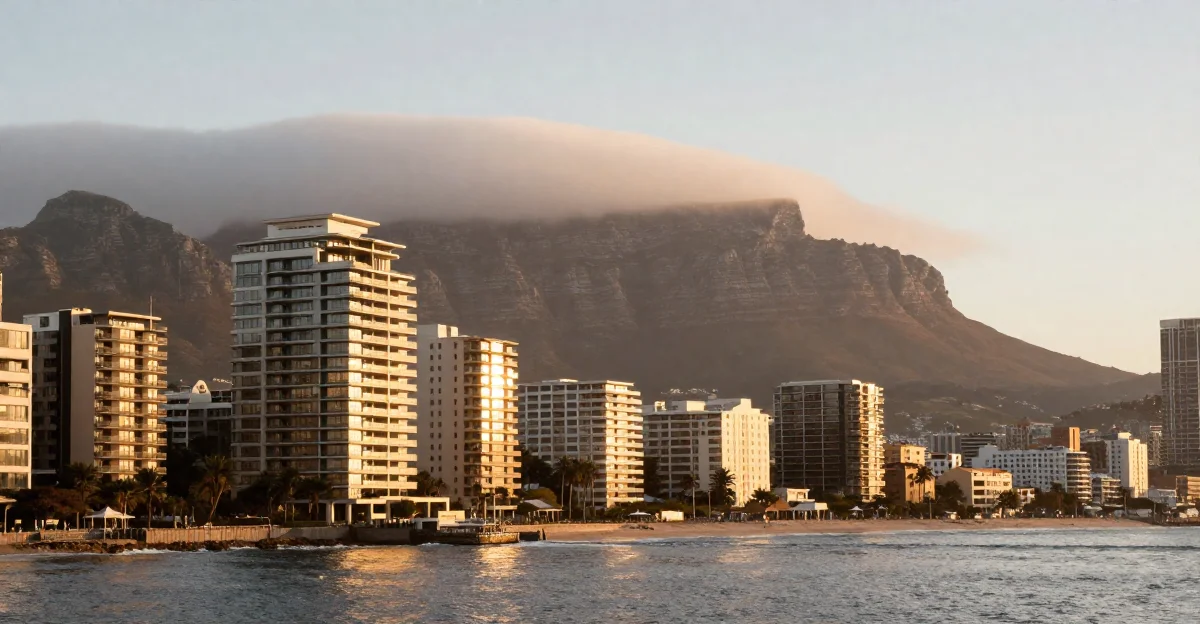
Cape Town’s Atlantic Seaboard (Sea Point, Green Point) and City Bowl areas are the first choice of international investors. Long-term rental demand in these zones is stable all year, for reasons including:

  • A large pool of expatriates from multinationals (finance, technology, and energy sectors)
  • Growing demand from local professionals
  • Properties with complete indoor amenities are more competitive in winter

Strategy 2: The Resilience of the Dual-Engine Combination

Of the R 16,000,000 allocation, R 10,450,000 is deployed in the rental engine and R 5,000,000 in the interest engine. When winter rental income may fluctuate slightly, the interest engine’s R 335,000+/year provides a stable cash-flow buffer. This is the design intent of the dual-engine structure — not to chase a single high return, but to secure the stability of year-round cash flow.

Strategy 3: The Positive Impact of 2024-2025 Energy Improvements

South Africa’s load-shedding problem has improved steadily in recent years, with outages sharply reduced in the winters of 2024-2025. For the rental market, this means:

  • Higher winter tenant satisfaction and renewal rates
  • More value is placed on properties with solar and backup power
  • Lower outage risk strengthens overseas investor confidence

Comparison with Other Overseas Property Markets

Comparison Cape Town (Guaranteed Rental) London Singapore
Entry threshold R 16,000,000 Approx. R 50,000,000+ Approx. R 20,000,000+
Rental yield 8-10% (full-occupancy income) 2.5-4% 2.5-3.5%
Interest engine R 5,000,000×6.5%≈R 335,000+/yr Interest rate 4-5% Interest rate 3-4%
Legal trust protection Legal trust protection structure Must be arranged separately Restrictive for foreigners
Winter cash-flow stability Locked in by long-term leases Peak-season short-term volatility Relies on a single income source

Cape Town’s dual-engine structure holds comprehensive advantages in entry threshold, rental yield, and cash-flow stability — particularly its ability to sustain stable cash flow through the winter off-season.

Conclusion: The Off-Season Is Not a Risk, But an Opportunity to Validate Your Investment Structure

Cape Town’s winter is not a season overseas investors should fear — quite the opposite: it is the best time to test whether an investment structure has counter-cyclical resilience. By choosing guaranteed-rental management over short-term lets and pairing it with the dual-engine return structure (rental + interest), investors can secure year-round stable returns of R 1,171,000 to R 1,380,000 in annual cash flow at an entry threshold of R 16,000,000.

The legal trust protection mechanism secures the entire journey from capital entry to property settlement, so overseas investors never need to worry about capital safety.

Consult the DingYao advisory team now to learn how the Phase 1 South Africa programme can build a stable, year-round overseas investment cash flow for you.


Scott Huang

Scott Huang

Business Development — Specializing in Cape Town premium property investment and cross-border wealth management for Asia-Pacific high-net-worth individuals.

Start Your Cape Town Property Journey

Schedule a one-on-one consultation with our team to explore premium investment opportunities in Cape Town's most resilient markets.

Consultation