SARB July MPC Preview: Three Rate Scenarios and What They Mean for Cape Town Property Investors

Three Structural Trends Reshaping Cape Town Property in H2 2026: Semigration, Foreign Capital Inflow, and Supply Crunch — DingYao Advisory

Trend 1: Semigration Accelerates — The Great Population Shift from Gauteng to the Western Cape

South Africa's internal migration is redrawing the property market map. PropFlow360 data shows mortgage applications from Gauteng to the Western Cape have surged 35% year-on-year — not a short-term blip but a structural population redistribution.

Why are Gauteng residents moving south?

  1. Quality of life: Cape Town consistently ranks among the world's best cities, with unmatched natural beauty and climate
  2. Remote work normalization: Post-pandemic remote work allows professionals to choose their location, and Cape Town is the top choice
  3. Safety concerns: Deteriorating security in Gauteng is accelerating family relocations to the Western Cape
  4. Retirement wave: Baby boomers are choosing Cape Town as their retirement destination

BetterBond data shows Western Cape property prices growing 9.3% year-on-year (StatsSA 2026 Q1), well above the national average. This Semigration wave is providing sustained demand-side support for Cape Town's property market.
Trend 2: Foreign Cash Buyers Flood In

Cape Town's international appeal is translating into real capital inflows. BetterBond reports that foreign buyers now account for over 40% of R 10M+ transactions, and this share is still rising.

Why overseas buyers choose Cape Town:

  • Price advantage: Compared to Sydney, Vancouver, London, and other global cities, Cape Town property remains relatively affordable
  • Currency discount: The structurally weak Rand provides a natural discount for foreign currency buyers
  • Rental yields: Net yields of 7.5-7.9% (The Africanvestor data) rank among the highest in major global cities
  • Capital appreciation: Cape Town property prices have risen 179.6% cumulatively since 2010, an annualized growth of approximately 7.5%

The influx of foreign cash buyers not only pushes up prices in the premium segment but also indirectly affects the mid-market — as high-end buyers capture prime locations, mid-tier buyers are pushed outward, creating a price transmission effect.

Trend 3: Structural Supply-Side Crunch

Cape Town's supply problem is structural, not cyclical. Property24 data shows active listings in Cape Town dropped from 6,584 in December 2025 to 5,759 in May 2026 — a 12.5% decline in just six months.

Why supply cannot increase quickly:

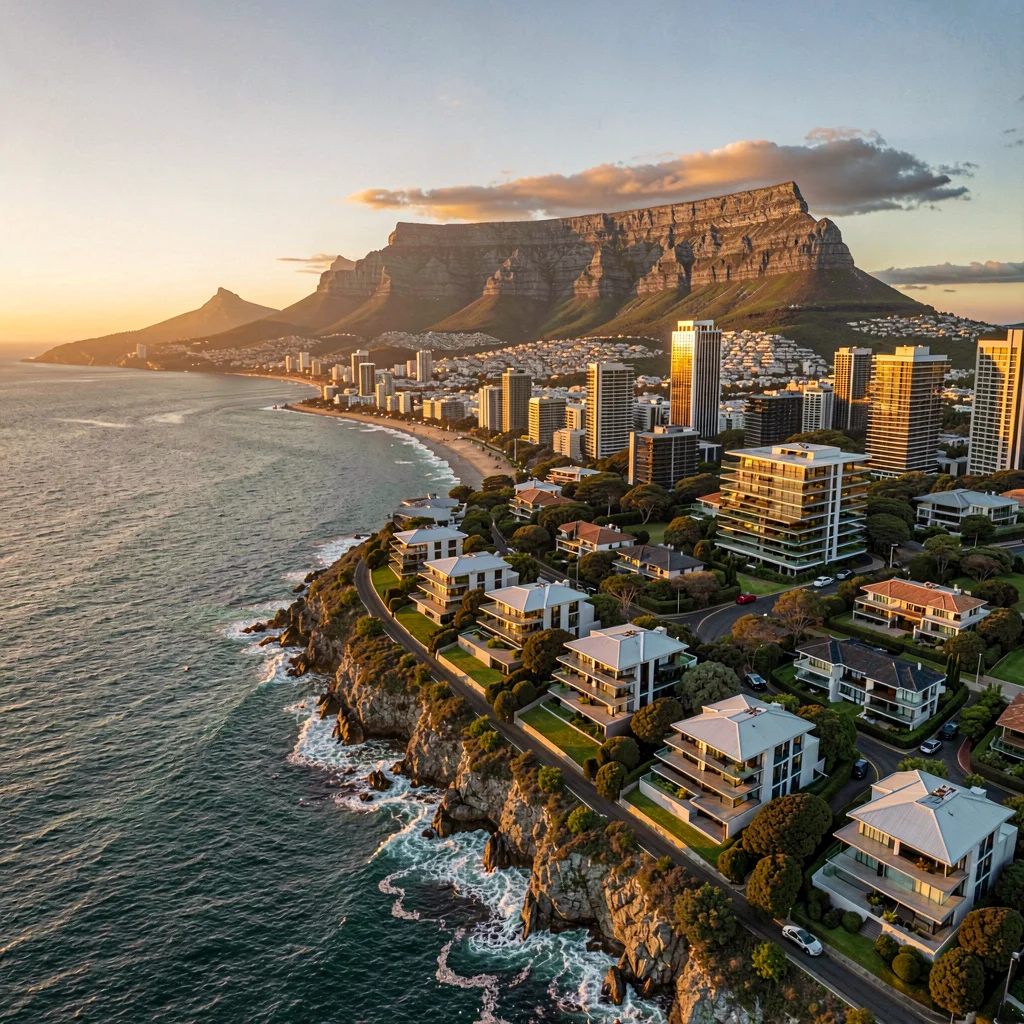
  1. Geographic constraints: Mountains and ocean create natural barriers, and Table Mountain National Park's protected areas severely limit developable land
  2. Strict zoning regulations: City of Cape Town's zoning laws restrict high-density development, especially in prime coastal areas
  3. Rising construction costs: Western Cape construction costs are rising 8-12% annually, compressing new development margins
  4. Lengthy approval timelines: From land application to building permit approval averages 18-24 months

This means even if demand cools, supply cannot increase rapidly — Cape Town property prices have a "hard floor" more solid than most investors realize.

The Interaction Effect of Three Forces

These three forces do not operate independently — they reinforce each other:

  • Semigration pushes demand → supply tightens further → prices rise → attracts more foreign buyers
  • Foreign buyers flood in → premium prices rise → mid-market follows → Semigration buyers accelerate entry
  • Supply tightens → rents rise → yields improve → attracts more investment buyers

This positive feedback loop is creating a rare "structural bull market" for Cape Town property — not driven by short-term factors, but by demographics, international capital flows, and geographic constraints shaping a long-term trend.

The Dual-Engine Strategy in This Structural Environment

For overseas investors, DingYao's R 16,000,000 Phase 1 dual-engine plan is uniquely positioned in the current environment:

ItemAmountDescription
Total InvestmentR 16,000,000Entry threshold
Property PurchaseR 10,450,000Curated Cape Town property
Related Costs~R 550,000Transfer duty, lawyer trust protection (律師信託保護) setup
Post-Transfer DepositR 5,000,000Standard Bank Wealth savings account (6.5% daily compound interest)

Dual-Engine Annual Cash Flow:

  • Rental Engine: R 10,450,000 × 8-10% = R 836,000 - 1,045,000/year (at full occupancy)
  • Interest Engine: R 5,000,000 × 6.5% daily compound interest ≈ R 335,000+/year (effective annual rate ~6.72%)
  • Total Annual Cash Flow: R 1,171,000 - 1,380,000

In an environment of persistent supply tightening, the rental engine's returns have room to grow as market imbalances deepen. Meanwhile, the Standard Bank Wealth savings account provides a stable passive income floor.

Conclusion: Entry Strategy for H2 2026

Cape Town's three structural forces — Semigration, foreign capital inflow, and supply crunch — will continue to strengthen through H2 2026. For overseas investors, the key question is not "whether to enter" but "how to enter."

Three recommendations:

  1. Use the rate uncertainty window: Before the July 23 SARB MPC meeting, market uncertainty creates the widest negotiation margins
  2. Choose lawyer trust protection structures: Ensure capital security while earning interest income during the waiting period (approximately R 86,000/month)
  3. Adopt the dual-engine strategy: Dual passive income streams from rent + interest for stable growth in a structural trend

When structural forces are on your side, time becomes your ally.

Scott Huang

Scott Huang

Business Development — Specializing in Cape Town premium property investment and cross-border wealth management for Asia-Pacific high-net-worth individuals.

Start Your Cape Town Property Journey

Schedule a one-on-one consultation with our team to explore premium investment opportunities in Cape Town's most resilient markets.

Book Now