> >
Atlantic Seaboard safe haven for international investors

Atlantic Seaboard's Recession Resilience: Why the Cape of Storms Region Is a Safe Haven for International Investors

Introduction

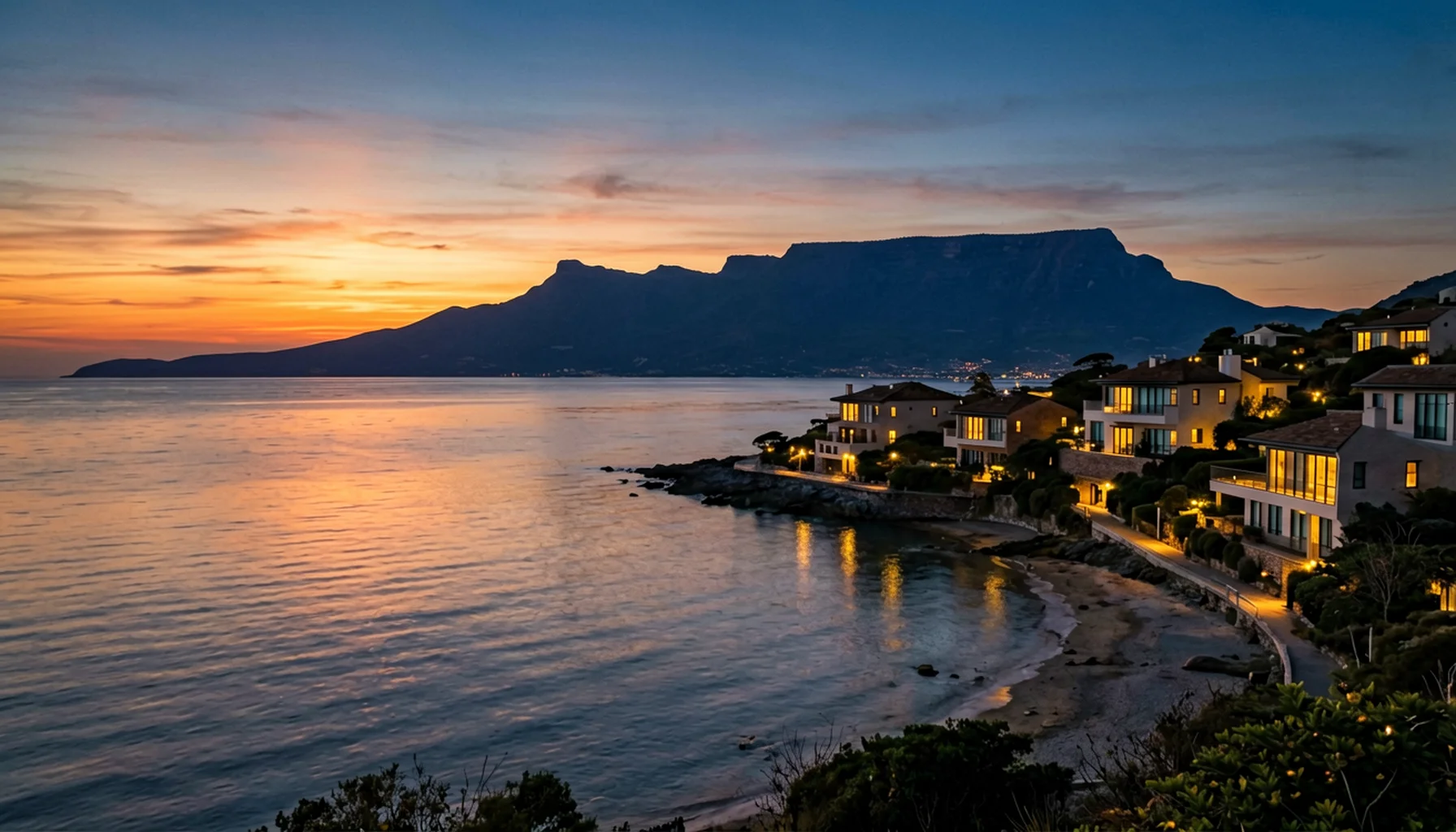
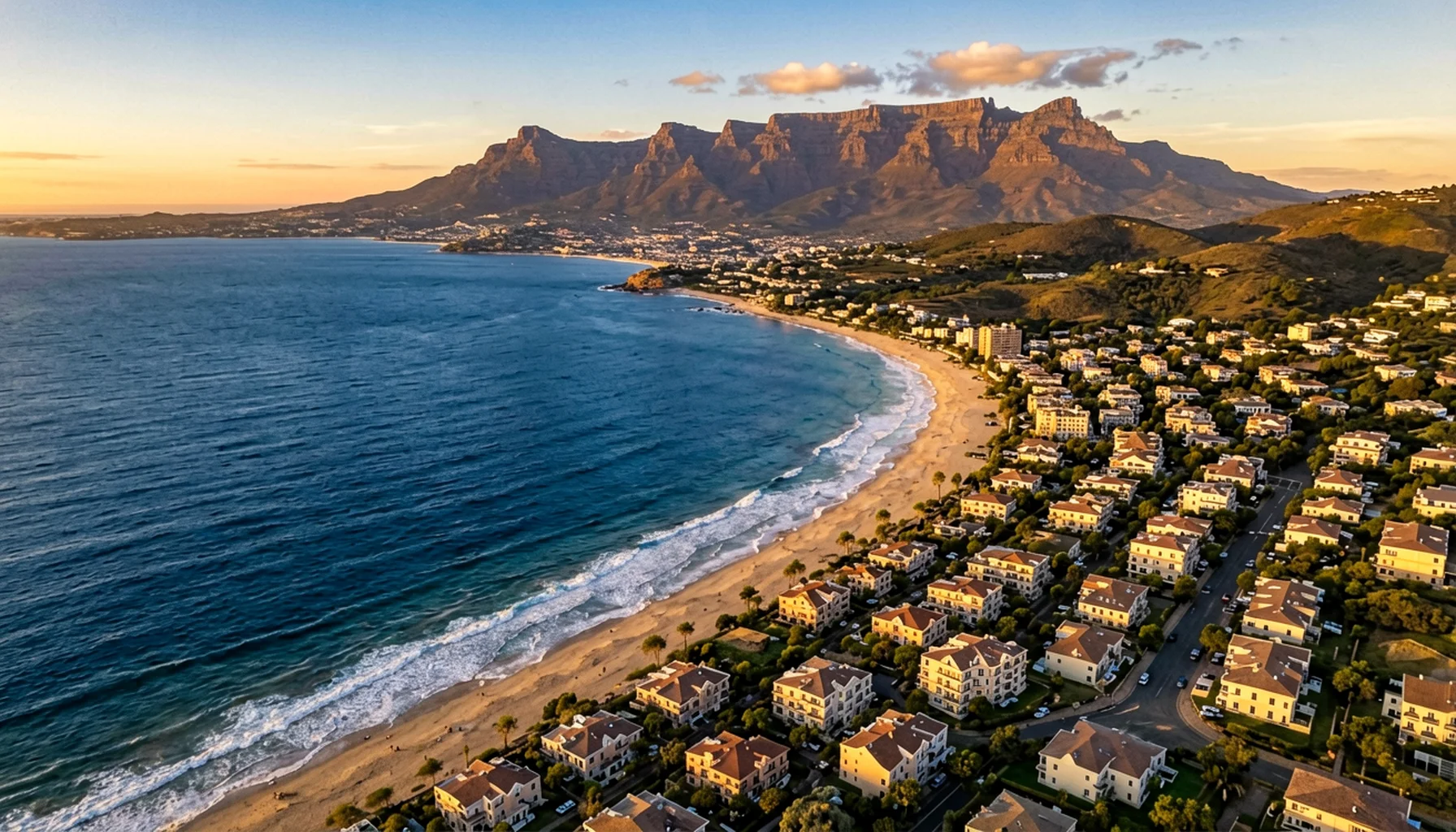
When global markets are volatile and black-swan events strike with increasing frequency, the question international investors care about most is not "where will prices rise the most" but "where will they fall the least." Cape Town's Atlantic Seaboard — the narrow belt running from Clifton through Camps Bay, Sea Point, Bantry Bay and Fresnaye, cradled between Table Mountain and the Atlantic Ocean — has proven its striking recession resilience across three crises, establishing itself as the "Cape of Storms safe haven" in the eyes of high-net-worth international investors.

For Taiwanese investors seeking offshore property, the Atlantic Seaboard is far more than a breathtaking coastline — it is a stress-tested strategy for allocating scarce assets. A R 16,000,000 entry point, combined with the dual engines of rental income and interest, can deliver annual cash flow of R 1,171,000 to R 1,380,000. Add the protection of an attorney trust structure, and your capital remains safe and stable amid South Africa's economic fluctuations.

Recession Resilience Proven Across Three Crises

2008 Financial Crisis: National Decline of 15-20%, Atlantic Seaboard Fell Just 8%

During the global financial crisis, average residential property prices across South Africa fell 15-20%, and several premium Johannesburg districts dropped more than 25%. Yet Clifton and Camps Bay on the Atlantic Seaboard declined only 8% — and rebounded sharply within six months. Data from Pam Golding Properties shows that by Q2 2009, Atlantic Seaboard transaction volumes had recovered to 90% of pre-crisis levels, well above the national average of 60%.

This resilience is rooted in acute supply-side scarcity — developable land between the Table Mountain National Park and the Atlantic coastline is extremely limited, with new developments subject to the dual constraints of national park conservation law and coastal protection regulations, holding annual new supply below 1%.

2020 Pandemic Shock: International Tenant Demand Held the Price Floor

In the early stages of the COVID-19 pandemic, the Western Cape property market as a whole was indeed affected, but the Atlantic Seaboard displayed exceptional stability thanks to its unique structure of international buyer demand. Multinational corporate executives and expatriate technology employees — including staff at Amazon, Microsoft and Google's African headquarters in Cape Town — became a stable pillar of the rental market. Seeff's reports indicate that annual price declines on the Atlantic Seaboard's premium properties were contained within 5%, while the national average fell 8-12% over the same period.

2023 Economic Downturn: National Stagnation, Atlantic Seaboard Still Grew 4-6%

Entering 2023, South Africa's national residential market grew just 0.8% year-on-year, with several provinces recording negative growth. Yet the Atlantic Seaboard — driven by the sustained inflow of international buyers, who account for roughly 35% of transactions in the area — achieved annual price growth of 4-6%. This is no coincidence; it is the inevitable result of scarce supply converging with global demand.

Geographic Scarcity: Supply That Is Permanently Constrained

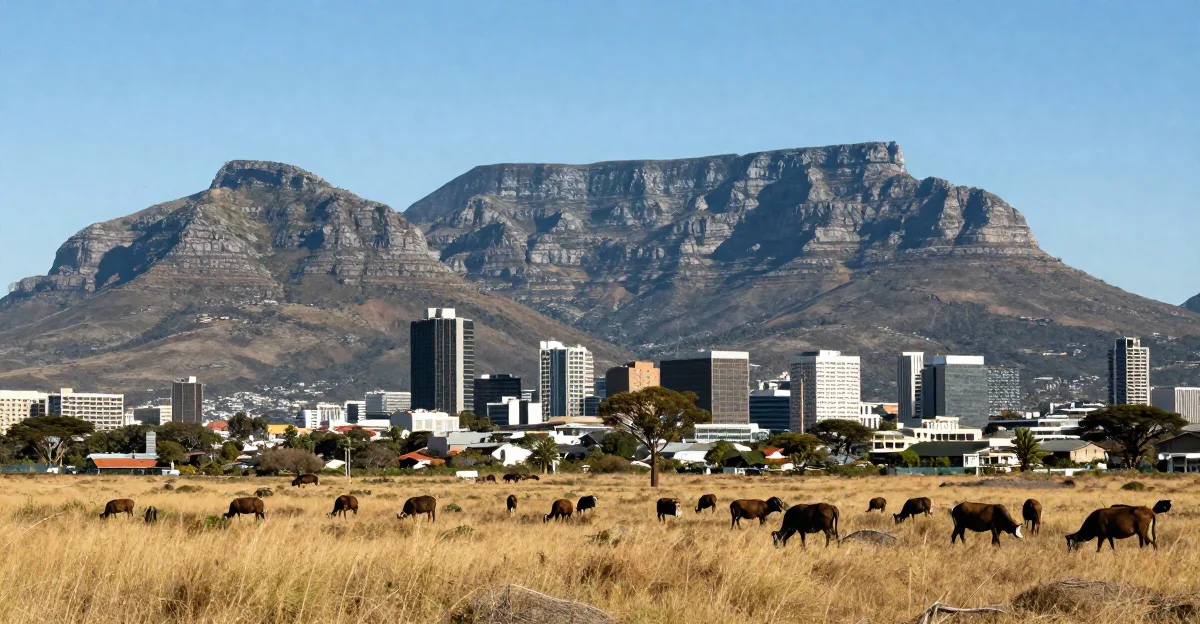
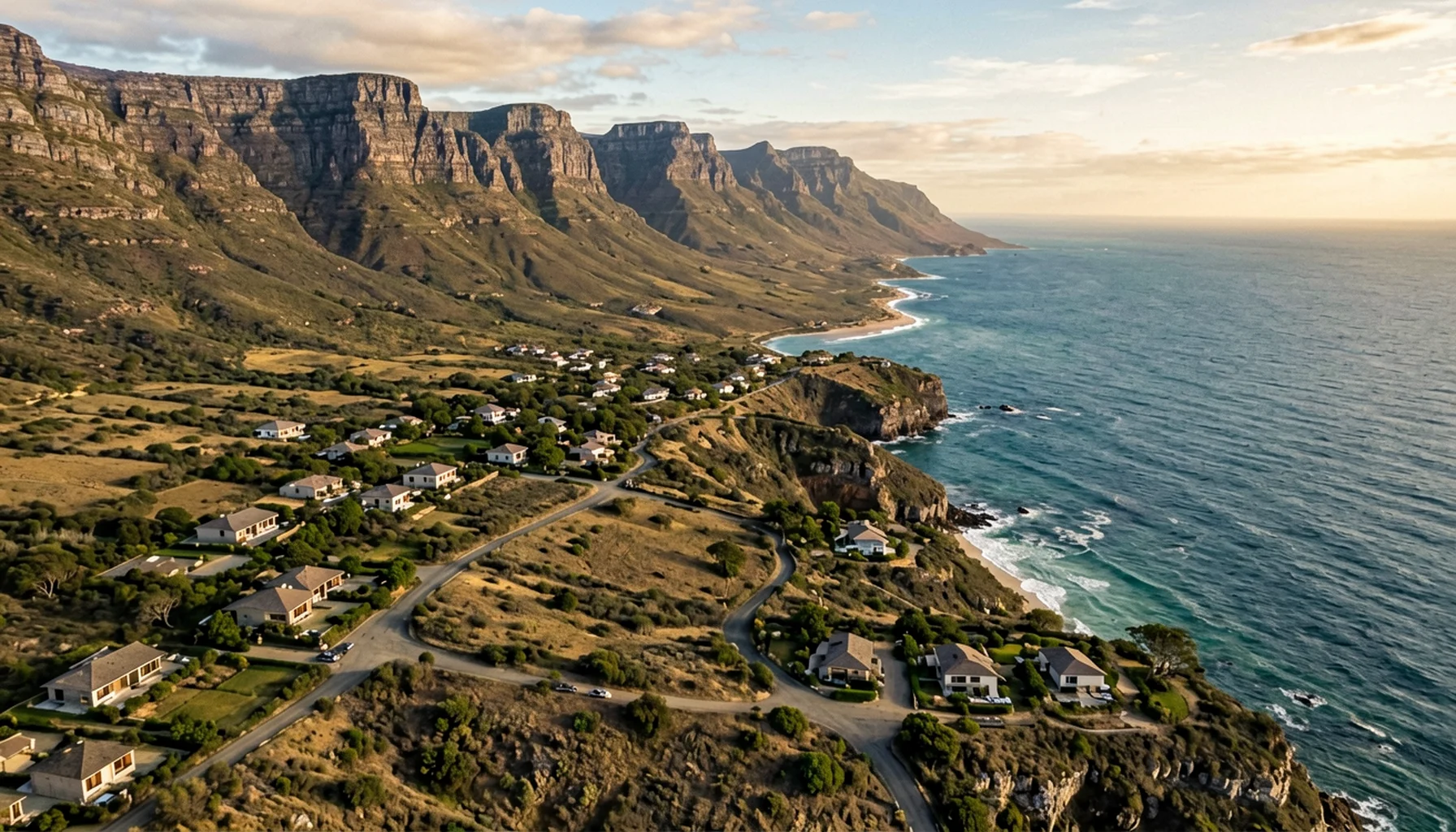
The Atlantic Seaboard's recession resistance is deeply rooted in its irreproducible geography. Along this narrow belt extending from Sea Point to Clifton, the vast Atlantic Ocean bounds the west and the towering Table Mountain National Park the east, leaving developable land almost entirely exhausted.

Three layers of development constraint:

  • National park conservation boundaries cannot be crossed, making expansion nearly impossible
  • Coastal protection regulations strictly limit the height and density of shoreline buildings
  • Sloping terrain limits the feasibility of large-scale residential development

The result is that annual new housing supply is under 1%, turning the existing housing stock into a "non-renewable resource." For international investors, this permanent scarcity on the supply side is the strongest guarantee of capital preservation — no matter how the economic cycle turns, homes on the Atlantic Seaboard remain in a state of "many want to buy, few are available."

International Tenant Market: Global Demand as a Support Structure

The Atlantic Seaboard's resilience relies not only on scarce supply but also on stable international tenant demand.

Tenant profile:

  • Multinational corporate executives: employees of tech giants such as Amazon, Microsoft and Google in Cape Town, with monthly rent capacity of R 50,000-150,000
  • International school families: European and American diplomats and business families choosing Sea Point and Bantry Bay
  • Long-term expatriate retirees: affluent seniors pursuing a high quality of life, typically leasing for 3-5 years
  • Expatriate technology talent: short-to-medium-term assignees posted by Silicon Valley and European tech hubs

Leasing characteristics:

  • Leases start at 2-3 years, with annual or semi-annual payment as the norm
  • Vacancy has remained below 2% over the long term, far better than the 8-12% seen in Johannesburg's premium districts
  • Most tenants pay out of USD or EUR budgets, so lease performance is insulated from rand depreciation
  • Rental yields of 8-10% (at full occupancy) rank among the highest in South Africa's premium market

This means a R 10,450,000 property allocation can generate annual rental income of R 836,000 to R 1,045,000 (based on full occupancy; income is earned only while the property is rented), with high-quality, stable tenants.

DingYao Phase 1: The Optimal Allocation Window on the Atlantic Seaboard

The Dual-Engine Cash Flow Structure

Engine Basis of Calculation Annual Income
Rental engine R 10,450,000 × 8-10% (full-occupancy income) R 836,000 - R 1,045,000
Interest engine R 5,000,000 × 6.5% Standard Bank Wealth call account, compounded daily and paid monthly ≈ R 335,000
Total annual cash flow Dual-engine structure R 1,171,000 - R 1,380,000
  • Entry threshold: R 16,000,000 (sixteen million rand)
  • Property purchase price: R 10,450,000
  • Related costs: approximately R 550,000 (transfer, attorney, trust establishment, etc.)
  • Post-transfer deposit: R 5,000,000 placed in a Standard Bank Wealth call account
  • Attorney trust protection: a capital safety mechanism that begins accruing interest from day one

The Hidden Engine During the Waiting Period

Once the full R 16,000,000 enters the protected attorney trust account, it immediately starts earning interest — approximately R 86,000 per month (about R 2,849 per day). Your client's capital never sits idle from day one: while awaiting property transfer, interest is already accumulating.

Atlantic Seaboard vs. Other Premium Markets

Region Entry Threshold Vacancy Rate Annual Cash Flow (Based on R 16M Allocation) Recession Record
Atlantic Seaboard R 16,000,000 <2% R 1,171,000-1,380,000 Positive growth across three crises
Johannesburg Sandton R 12,000,000 8-12% R 720,000-960,000 Fell 25%+ in 2008
Durban Umhlanga R 8,000,000 6-10% R 480,000-640,000 Declined 10%+ during the pandemic
Taipei Xinyi District Equivalent to ~R 16M ~5% ~R 500,000-650,000 Relies on a single market

The Atlantic Seaboard's advantage is immediately apparent: lower vacancy, more stable cash flow, and a crisis-proven record of resilience.

The Right Time for Taiwanese Investors to Act

With global black-swan events occurring with rising frequency, waiting for "a better time" often means missing the scarcest assets. The Atlantic Seaboard's supply grows less than 1% each year, and prime properties paradoxically become harder to acquire precisely when market pressure is greatest — because owners refuse to sell resilient assets during downturns, while international buyers accelerate their allocation to safe havens at exactly that moment.

For high-net-worth Taiwanese investors, the R 16,000,000 entry threshold delivers:

  1. A recession-proven, resilient asset across three crises
  2. Stable cash flow of R 1,171,000-1,380,000 per year underpinned by international tenants
  3. Capital safety secured by attorney trust protection
  4. Long-term appreciation potential driven by scarce supply

Conclusion

The Atlantic Seaboard is more than Cape Town's most beautiful coastline — it is a "Cape of Storms safe haven" stress-tested through three global crises. Extremely scarce supply, globally sourced demand, stable rental income and attorney trust protection combine to make it the most reassuring choice for international investors in an age of uncertainty.

Consult DingYao Advisory today to explore the complete Atlantic Seaboard ownership program, and keep your offshore investment as solid as rock amid the global storm.

References and Data Sources

  • Pam Golding Properties — Atlantic Seaboard Market Analysis Report
  • Seeff — Cape Town Premier Regional Property Report
  • City of Cape Town — Spatial Development Framework
  • South African Reserve Bank — Economic Data and House Price Indices
  • BBC Africa — Reporting on South Africa's Investment Environment
LP

Scott Huang

Business Development, focused on premium Cape Town property investment and wealth management, helping high-net-worth individuals across Asia-Pacific invest offshore securely through attorney trust protection structures.

Start Your Cape Town Property Journey

Invest safely in Atlantic Seaboard Phase 1 through an attorney trust protection structure, with dual-engine annual cash flow of R 1,171,000-1,380,000. Book your consultation today for a personalised investment assessment.

Consultation